Media Archive on Air Quality in Armenia — 2022 and earlier

December 2022

E

The Armenian government has introduced mandatory environmental and sanitary requirements for construction sites (machine translation)

On December 8, the Armenian government approved new rules for construction sites that make compliance with standards for the protection of atmospheric air and the environment, as well as requirements for occupational safety, sanitation, and technical safety, mandatory. The decision is intended to eliminate an arbitrary approach and enshrine these conditions in contracts for the procurement of construction programs.

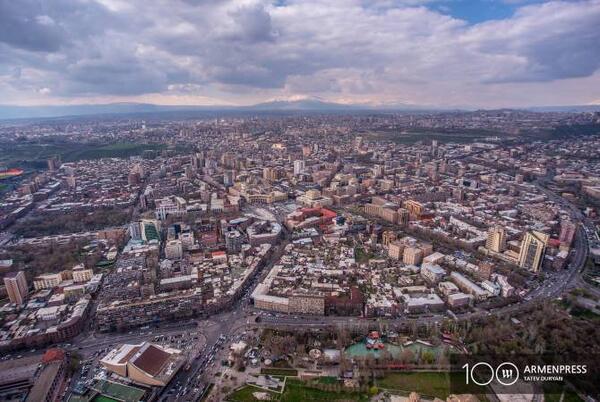
Commenting on the decision, Armenian Prime Minister Nikol Pashinyan stated that an “unprecedented” level of dust had been recorded in Yerevan amid sharply increased construction volumes and numerous reports of pollution. According to him, one of the reasons is the failure to comply with standards at construction sites; he also emphasized the importance of properly organizing sites, separating them from the daily lives of city residents, and complying with requirements related not only to ecology, but also to safety, aesthetics, and the socio-psychological environment.
Read the full article on ecolur.org

November 2022

E

Armenia’s Ministry of Environment Says 70% of Air Pollution Is Linked to Transport (machine translation)

About 70% of air pollution in Armenia comes from transport, said Gayane Shahnazaryan, deputy director of the Hydrometeorology and Monitoring Center of the RA Ministry of Environment, at a press conference on November 15 at the Media Center. According to her, the growth of transport emissions has been the main factor behind the deterioration of air quality in recent years.

Shahnazaryan reported that, compared to 2017, the volume of emissions has increased by 35–40% over the past five years. She noted that concentrations of carbon monoxide, volatile organic compounds, and nitrogen dioxide in the ambient air have risen, while no significant increase was observed from stationary sources of pollution—only a slight upward trend was recorded.

She also pointed out that the administrative districts of Yerevan most polluted by dust are Kentron and Shengavit, and during certain periods, Nor Nork as well. At the same time, Shahnazaryan emphasized that air pollution is not purely a local issue and, in her assessment, this is a problem being tackled worldwide today.

Read the full article on ecolur.org

“Armenia’s Ministry of Ecology Reports a 30–40% Increase in Air Pollution Over Five Years” on news.am

October 2022

E

In Yerevan, air pollution exceeds acceptable limits due to dust, construction, and industrial emissions (machine translation)

In Yerevan, according to monitoring data, air pollution levels exceed permissible standards, with dust remaining the most noticeable problem. In early October, in the Kentron administrative district, its concentration was 1.8 times above the norm, and during strong winds on September 21, exceedances, according to Gohar Hakobyan, head of the Atmospheric Air Quality Monitoring Service, reached 12 times the norm at one of the monitoring stations.

Authorities and environmental organizations place different emphasis on the causes of pollution, but both sides point to the systemic nature of the problem. Hakobyan notes that the existing five stations are insufficient to provide a complete picture, while Victoria Burnazyan, vice president of the NGO Ecolur, believes that it is important not only to expand the monitoring network but also to study the composition of the air, since, according to her, other studies have detected mercury, arsenic, and heavy metals in it that are not covered by current monitoring.

Inspections by the Environmental Protection and Subsoil Inspection Body revealed violations at all ten surveyed mines, as well as at most of the inspected construction companies and carriers of construction materials. Over the past year, fines totaling 3.71 million drams were imposed on mines, 4.95 million drams on construction sites, and 2.2 million drams for 44 cases of transporting cargo without impermeable covering; at the same time, Armen Labladzhyan, head of the Yerevan territorial subdivision of the agency, stated that the situation had somewhat improved, whereas Burnazyan insists on the urgent expansion of green areas, linking air pollution not only to environmental concerns but also to health risks.

Read the full article on ecolur.org

August 2022

Yerevan remains in the red zone for air pollution, with dust and transport emissions as the main contributors

Yerevan remains in the red zone for air pollution, with dust and transport emissions as the main contributors (machine translation)

Yerevan remains in the red zone on the air pollution index and, according to Gayane Shakhnazaryan, Deputy Director of the Center for Hydrometeorology and Monitoring, the problem has persisted for years and shows no noticeable difference from last year. Of particular concern is dust pollution: in the absence of precipitation, it is observed year-round. Among the causes, the specialist named large-scale construction, mining operations, and the open burning of dumps, while gaseous pollution is mainly linked to road transport, gas burning in apartments, and electricity generation at thermal power plants.

According to monitoring data for August 8–14, dust levels in Yerevan exceeded the maximum permissible concentration by up to 3.5 times, and the most polluted locations were Arshakunyats Avenue and the area near the circus building; nitrogen dioxide exceedances were again recorded there as well. Outside the capital, Shakhnazaryan noted, Vanadzor, Alaverdi, and Gyumri remain the most dust-polluted cities, where MPC exceedances are also periodically recorded.

Armen Labladzhyan, head of Yerevan’s Department of Environmental Protection and Subsoil Inspection, attributed a significant share of the violations to the growing number of major construction sites, mining activity, and the transportation of loose materials without special coverings. According to him, 29 construction companies have already been fined 4.5 million drams, with separate environmental damage assessed at 1,201,721 drams, while administrative fines for 9 mines totaled 2.53 million drams with calculated environmental damage amounting to 23,074,228 drams; fines for violations during the transportation of materials and waste are 50,000 drams, and for construction-related violations — 100,000 drams.

Read the full article on armenpress.am

“Armenia’s Ministry of Environment names Yerevan districts and cities with the highest air pollution” on am.sputniknews.ru

June 2022

E

Armenia's Prosecutor's Office Reported High Air Pollution in Yerevan and Major Cities (machine translation)

Armenia's General Prosecutor's Office sent a notice to the Inspectorate for Nature Protection and Subsoil after reviewing data on the country's atmospheric air quality. The reason was the numerous cases of exceeding the maximum permissible concentrations of pollutants in Yerevan, as well as in Gyumri, Vanadzor, Alaverdi, Hrazdan, and Ararat, which the agency links to risks to public health.

The Prosecutor's Office indicates that the pollution is associated with industrial processes, vehicle operation, a number of construction and agricultural factors, as well as a lack of green areas. The agency proposed that the inspectorate promptly discuss more frequent control measures and strengthen oversight of emissions from stationary and mobile sources, the operation of treatment equipment, waste management, and compliance with dust emission standards at construction sites.

Read the full article on ecolur.org

“Air in Armenia is polluted but has not yet reached dangerous levels” on ecolur.org

April 2020

E

Armenia’s Ministry of Environment Proposes Increasing Fines for Waste Burning (machine translation)

Armenia’s Ministry of Environment has submitted for discussion a draft amendment to the Code of Administrative Offenses that would tighten liability for waste burning. The initiative applies to production and consumer waste, as well as fallen leaves, if they are burned in the natural environment, in or near populated areas, or in boilers, furnaces, and other devices not intended for this purpose.

The draft provides for a warning, followed by a fine of 50,000 drams for citizens and 200,000 drams for officials. For burning production and consumer waste at waste management facilities, in specially designated areas, or at unauthorized dumpsites, the proposal calls for fines without warning: 100,000 drams for citizens and 400,000 drams for officials; in the event of a repeated violation, the amounts, as stated in the draft, would double to 200,000 and 800,000 drams respectively.

Knarik Grigoryan, an expert at the NGO Armenian Women for Health and a Healthy Environment, believes that legal measures alone are not enough to solve the problem. According to her, bans and fines should be accompanied by awareness-raising efforts, secondary legislation, and practical alternatives — from composting leaves to plastic collection points and tools for reuse and recycling.

Read the full article on ecolur.org

E

Air pollution decreased in Yerevan during the coronavirus state of emergency (machine translation)

In Yerevan, under the state of emergency introduced to prevent the spread of the coronavirus, a decrease in atmospheric air pollution was recorded. According to the Environmental Monitoring and Information Center SNCO, this indicates a noticeable change in the city's air quality in late March 2020.

According to the center's statement, from March 22 to 31, dust concentration decreased by approximately 42% compared to the beginning of the month and by 31% compared to February. The source cites restrictions or bans on transport movement and certain types of economic activity as the reason for this decrease.

Read the full article on ecolur.org

January 2020

H

Harmful Emissions in Armenia Are Rising, and Peak Air Pollution in Yerevan Has Surpassed Moscow and Istanbul (machine translation)

In Armenia, harmful emissions into the atmosphere increased significantly between 2000 and 2018, and peak PM2.5 air pollution levels in Yerevan, according to 2019 data from The New York Times, were higher than in Moscow and Istanbul. This matters because these are fine particulate matters which, as the source noted, are associated with severe health consequences and, at high concentrations, pose a serious risk to urban populations.

According to Hetq, over 19 years the volume of emissions in Armenia increased by 40% to 263,400 tons, with a minimum of 149,500 tons in 2002 and a maximum of 291,000 tons in 2017. From 2000 to 2018, 68.3% of harmful emissions came from motor vehicles, although in recent years the share of transport-related pollutants, according to the publication, slightly declined to 56.7%, while emissions from stationary sources tripled. According to the NYT figures cited, on the worst day of 2019 PM2.5 levels reached 153 μg/m3 in Yerevan, 104 in Gyumri, 103 in Vanadzor, and 75 in Stepanakert; for comparison, this indicator was 41 μg/m3 in Moscow and 91 in Istanbul.

Among the regions, Hetq identifies Lori Province as the most polluted by non-transport sources, where atmospheric emission volumes are significantly higher than in other marzes: in 2014–2018, about 45,000 tons per year were emitted there on average. Vayots Dzor Province was named the cleanest by this measure, with an average level of 324 tons, while in Yerevan emissions from stationary sources over the past five years averaged 16,000 tons annually.

Read the full article on hetq.am

“How polluted is the air we breathe in Yerevan” on ecolur.org

August 2017

H

Monitoring: Dangerous peaks in air pollution and exceedances of dust and gas limits were recorded in Yerevan (machine translation)

In Yerevan, on certain days, concentrations of air pollutants reached alarming levels, with exceedances of maximum permissible concentrations recorded not only in the city center and the south, but also in the northern districts. Data from the Environmental Impact Monitoring Center under the Ministry of Nature Protection show that the annual average indicators for a number of substances may have remained within the norm, yet short-term peaks were significantly above permissible levels.

Expert Knarik Grigoryan emphasizes that a direct cause-and-effect relationship between specific pollution episodes and illnesses must be proven through separate studies, but considers it unquestionable that well-being worsens and respiratory and cardiovascular problems intensify on days of severe pollution. A study by Nairui Mkrtchyan on heavy metals in urban dust also points to high and very high levels of pollution in different parts of Yerevan, identifying molybdenum, cadmium, lead, and zinc as significant pollutants.

Read the full article on hetq.am

August 1985

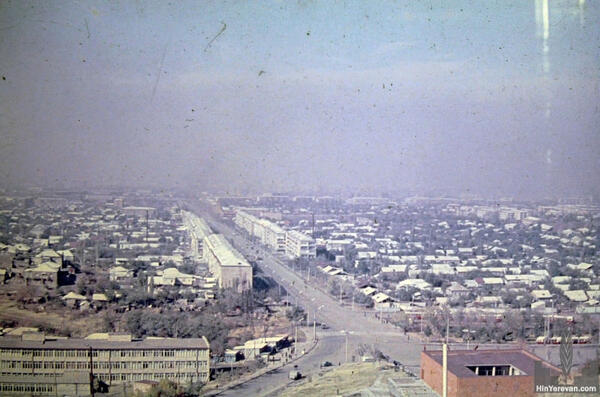
In Soviet Armenia, as in Los Angeles, the mountains are obscured by smog

In Soviet Armenia, as in Los Angeles, the mountains are obscured by smog (machine translation)

In Yerevan, smog has become a noticeable urban problem: views of Mount Ararat, one of the main symbols of Armenian identity, are at times obscured by industrial emissions and automobile exhaust. The authorities of the Armenian SSR launched a campaign to reduce air pollution to a more acceptable level by 1990, but were not prepared to impose strict limits on private motorists.

In a city with a population of nearly 1.2 million, there were about 60,000 private cars—more per capita than in other Soviet cities: one car for every 20 residents, compared with the Soviet average ratio of 1 to 47. Plans included converting state taxis, buses, and trucks to liquefied natural gas, relocating more than ten factories beyond the city limits, and installing pollution-control equipment; Deputy Chairman of the City Council Spartak Khachaturyan noted that the situation worsens in winter because of weak winds and Yerevan’s basin-like topography.

An additional measure under consideration was to curb the capital’s growth: planning authorities concluded that Yerevan was expanding too quickly. Therefore, residency registration and the creation of new jobs were restricted, and graduates of the city’s universities could remain in the capital only if they already had resident status.

Read the full article on latimes.com