Media Archive on Air Quality in Armenia — 2024

December 2024

The air in Yerevan is polluted but not dangerous, says the director of Armhydromet

The air in Yerevan is polluted but not dangerous, says the director of Armhydromet (machine translation)

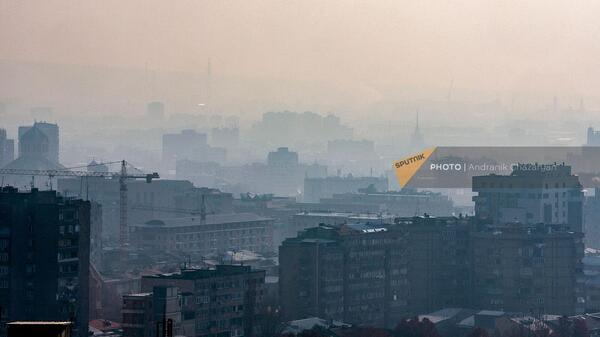
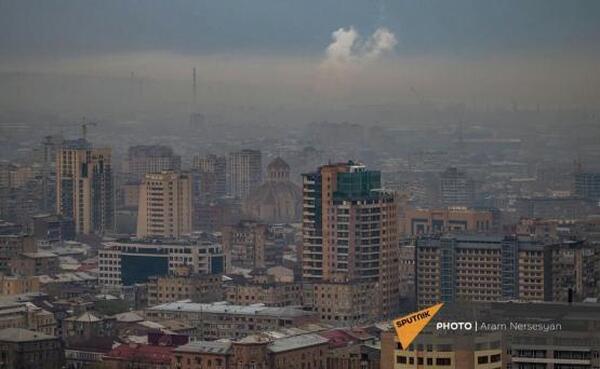
Levon Azizyan, director of the Center for Hydrometeorology and Monitoring, said that air pollution in Yerevan is considered unfavorable by international standards, but he does not regard the exceedance of the norms as dangerous. Monitoring in the capital is carried out at five stationary observation points, and the situation worsens in winter due to a local anticyclone in the Ararat Valley and Yerevan.

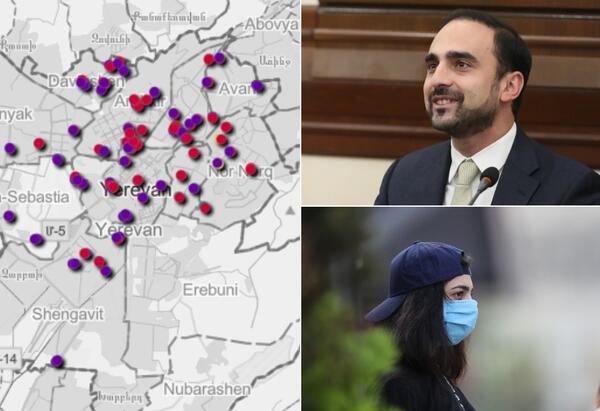
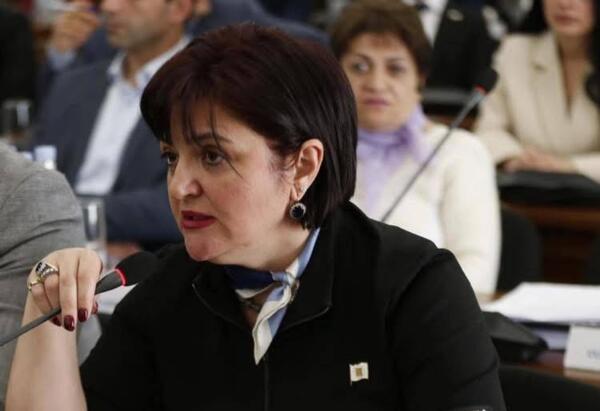
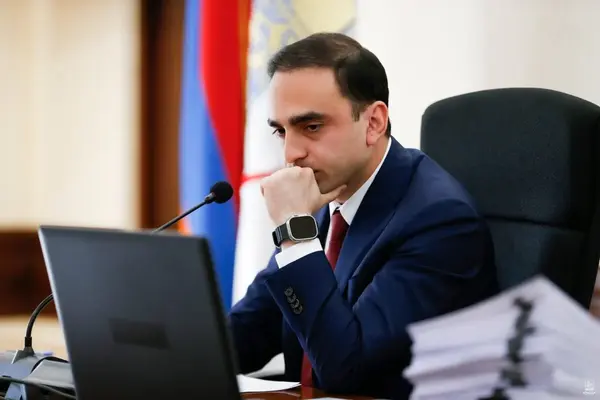
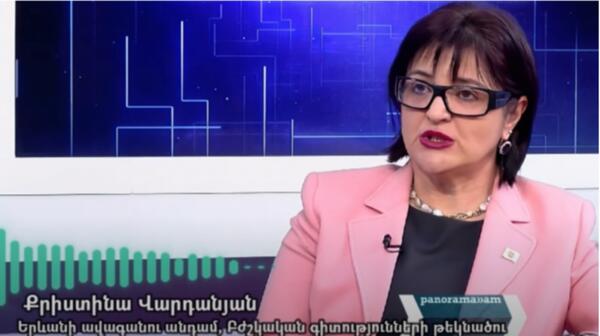
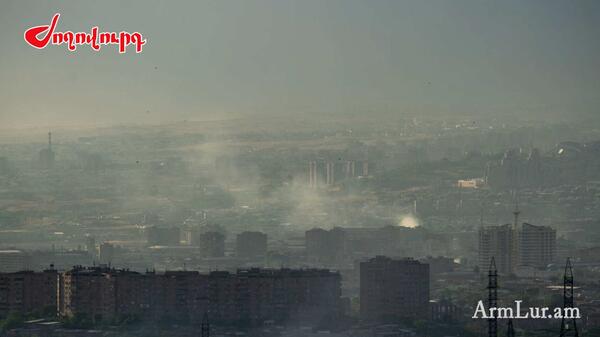
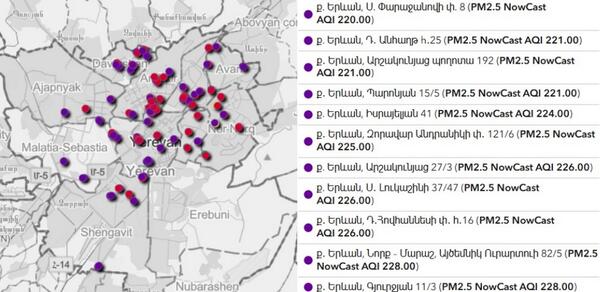
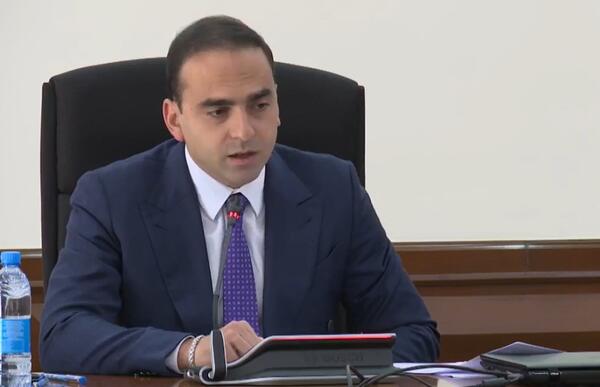
Amid residents' complaints about smog and the smell of burning in certain districts, PM2.5 levels classified as “very unhealthy” were recorded. Kristina Vardanyan, associate professor at YSMU and member of the Yerevan Council of Elders, warned that without effective measures the situation could become catastrophic, while Mayor Tigran Avinyan, who had previously called such discussions “legends,” instructed officials to prepare a four-year air-cleaning program after alarming winter data from 149 sensors.

Comment from the AirQuality.am editorial team According to WHO requirements, the annual average level should not exceed 5 µg/m³, and the daily level should not exceed 15 µg/m³. We consider claims that it is safe for health to be false.

Read the full article on newsarmenia.am

“Expert refutes: Air pollution in Yerevan exists but levels are not critical” on news.am

“Azizyan: High air pollution has developed in the region due to adverse meteorological conditions” on news.am

Yerevan Mayor Orders Development of a Plan to Improve Air Quality

Yerevan Mayor Orders Development of a Plan to Improve Air Quality (machine translation)

A comprehensive four-year plan to improve air quality is to be prepared in Yerevan. Mayor Tigran Avinyan issued the instruction, linking the task to the need to keep pollution generated by urban activity under control.

Information from 149 air quality monitoring devices is already available online on the official municipality website. At a working meeting, it was noted that annual exceedances in pollution levels are also linked to unfavorable meteorological conditions and the landscape of the Ararat Basin, where cold air accumulates in low-lying areas; at the same time, according to measurements, permissible limits for hazardous gases, nitrogen, sulfur, heavy metals, and persistent organic pollutants have not been exceeded in Yerevan.

Avinyan stated that the plan should include conceptual proposals, including tree planting, the creation of forest belts, and possible restrictions on the operation of old cars, which he called major polluters. The document is to be developed within two months.

Comment from the AirQuality.am editorial team In the autumn, before the start of the heating season, Tigran Avinyan denied the existence of the problem, but in December he was forced to acknowledge it. At the same time, the heating issue is being ignored, and the emphasis is placed on the idea that nothing can be done because of Yerevan’s geographical location.

Read the full article on ecolur.org

“Avinyan admitted the failure of the program to create a new landfill in Yerevan” on newsarmenia.am

“How Yerevan City Hall Plans to Combat Air Pollution” on radiovan.fm

“The mayor of Yerevan, who failed to fix garbage collection, has now proposed developing a program to improve the capital's air quality” on news.am

“Yerevan to develop a four-year program to improve air quality” on newsarmenia.am

Specialist linked air pollution in Yerevan to the mayor’s office’s governance problems

Specialist linked air pollution in Yerevan to the mayor’s office’s governance problems (machine translation)

Kristina Vardanyan, a member of the Yerevan Council of Elders and a Candidate of Medical Sciences, believes that the deterioration of air quality in the capital is a result of unresolved municipal governance problems. According to monitoring data, air pollution in Yerevan exceeds sanitary standards by 5–7 times, and in recent days the pollution index has reached 430 units, while the norm is no higher than 50.

Vardanyan links the situation to insufficient regulation of construction, non-compliance of construction sites with standards, tree cutting, and a lack of green spaces: according to her, even before this, Yerevan had five times fewer trees than the norm. In winter, the concentration of harmful substances increases due to weak winds and fog, and she named Kentron as the most vulnerable district because of dense development and problems with air circulation.

The specialist warned about health risks and advised that when the pollution index reaches 200 units or more, people should stay home if possible, keep windows closed, and wear a mask outdoors. Yerevan Mayor Tigran Avinyan said that a new program would be developed to improve air quality, and also proposed banning the operation of heavily smoking old cars; according to him, 149 air quality monitoring devices have been installed in the city.

Comment from the AirQuality.am editorial team Council of Elders member Kristina Vardanyan also avoids mentioning heating as one of the most important factors of pollution during the winter period. Also, air quality cannot be assessed based on the readings of a single sensor, which may be installed incorrectly. Air quality in Yerevan is poor, but judgments should be made based on the average reading at least for a district.

Read the full article on am.sputniknews.ru

“Expert Identifies Yerevan's Most Environmentally Unfavorable Districts” on newsarmenia.am

“"We're breathing poison": expert warns of lethal consequences of air pollution” on newsarmenia.am

September 2024

Avinyan’s statement about air quality in Yerevan is misleading

Avinyan’s statement about air quality in Yerevan is misleading (machine translation)

Yerevan Mayor Tigran Avinyan, at a meeting at City Hall, called discussions about poor air quality a “myth,” citing PM2.5 indicators which, according to him, have for months recorded a low or minimal average dust level. Media.am fact-checkers consider this statement misleading: PM2.5 is not the only indicator of air pollution, and concentrations of larger PM10 particles in Yerevan in many cases exceed the established threshold.

Avinyan also noted a discrepancy between the data of the Hydrometeorological and Monitoring Center and the municipality; City Hall reported that the number of urban sensors has grown from 85 to 117 since August. On the Yerevan.am website, PM10 exceedances were recorded at several addresses: at Ulnetsi 45/1 — 10 times above the norm, at Mikoyan 107/4 — almost 11 times, and at Griboyedov 17 — almost 7 times. PM2.5 exceedances were also noted at three locations, including David Bek, where the indicator reached 105 micrograms against the established limit of 35.

The WHO considers PM2.5 particles especially dangerous because of their ability to penetrate deep into the lungs and bloodstream, but PM10 also poses risks to the respiratory and cardiovascular systems. The international platform IQAir assessed PM2.5 concentration in Yerevan as 3.8 times higher than WHO standards, and a full assessment of air quality must also take into account ozone, nitrogen dioxide, and sulfur dioxide.

Read the full article on media.am

“The Threat Is Clear: Online Outcry Over Dangerous Air Pollution Levels in Yerevan” on newsarmenia.am

Kristina Vardanyan: A year ago, the Mayor of Yerevan and the Prime Minister sounded the alarm about air quality—what has changed?

Kristina Vardanyan: A year ago, the Mayor of Yerevan and the Prime Minister sounded the alarm about air quality—what has changed? (machine translation)

Disagreements have emerged between the Yerevan authorities and the expert community regarding the actual level of air pollution in Armenia’s capital. The trigger for the public discussion was conflicting data from official agencies and doubts about the accuracy of the equipment being used, calling into question the objectivity of the assessment of the city’s environmental situation. Resolving this dispute is of key importance for determining the future environmental policy of the municipal authorities.

Yerevan Mayor Tigran Avinyan stated that claims of extremely poor air quality and high dust levels are “myths,” citing readings from municipal sensors that show low levels of PM2.5 particles. In turn, Kristina Vardanyan, Candidate of Medical Sciences and member of the Council of Elders, called this assessment biased, pointing to the absence of data on the certification of the measuring instruments. According to her, a year ago the city and country’s leadership acknowledged that the situation was serious, and no visible improvements have occurred since then.

As arguments in favor of the persistence of environmental problems, Kristina Vardanyan cited such everyday factors as household dust, the growing number of cars and traffic congestion, as well as tree cutting and the activities of operating mines in the city. Armenia’s Ministry of Environment has not yet presented official results of the discussions between the mayor’s office and the Center for Hydrometeorology and Monitoring aimed at eliminating methodological differences.

Comment from the AirQuality.am editorial team Council of Elders member Kristina Vardanyan also avoids mentioning heating as one of the most important pollution factors during the winter period. Air quality is measured not only by the PM2.5 indicator, but also by ordinary dust and other substances.

Read the full article on panorama.am

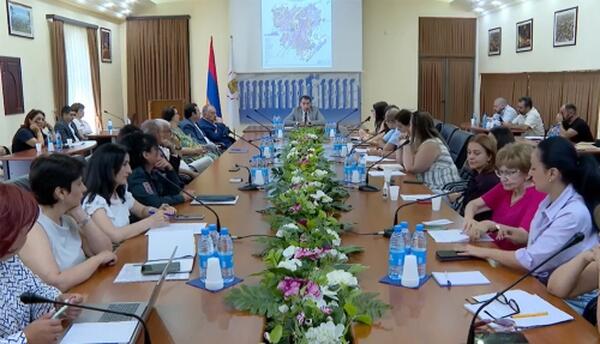
Avinyan: the mayor's office devices refute the “myth” of poor air quality in Yerevan

Avinyan: the mayor's office devices refute the “myth” of poor air quality in Yerevan (machine translation)

At a meeting at Yerevan City Hall on September 23, data from the city's air monitoring were presented: in August, the average PM2.5 concentration was 12.3 µg/m³. This figure is below the maximum permissible concentration established by law — 35 µg/m³.

The measurements were obtained from 85 monitoring stations, while the number of installed devices increased to 117. Mayor Tigran Avinyan stated that the city hall's data differ from the figures of the Hydrometeorology and Monitoring Center SNCO, but according to him, the city's online devices and vehicle-mounted sensors show a low level of dust and do not confirm claims of very poor air quality in Yerevan.

Comment from the AirQuality.am editorial team According to WHO requirements, the annual average level should not exceed 5 µg/m³, and the daily level should not exceed 15 µg/m³. This level is considered safe. The Mayor of Yerevan is also manipulating the figures, since air quality is measured not only by PM2.5 indicators, and the main complaints about dirty air occur during the heating season.

Read the full article on news.am

“Avinyan disagrees that Yerevan has poor environmental conditions and that air pollution exceeds acceptable levels” on newsarmenia.am

298 million drams allocated for the purchase of two atmospheric air quality monitoring stations

298 million drams allocated for the purchase of two atmospheric air quality monitoring stations (machine translation)

Armenia continues to experience high levels of air pollution: over the past five years, the indicator has increased by 15%. The Ministry of Environment has purchased two atmospheric air quality monitoring stations for Yerevan at a total cost of 298.2 million drams, or nearly $774,000.

The cost of one station amounted to 149.1 million drams; the supplier is listed as PIEF GROUP LLC, 100% of whose shares are owned by Melsik Baghdasaryan. Five stationary monitoring points are already operating in Yerevan, and the new stations are expected to arrive in 2025, after which it will be determined where they will be installed.

Against the backdrop of rising transport emissions, their volume over the past five years has increased by 35–40% compared to 2017. In July, Gorik Avetisyan, deputy head of the Environmental Protection Department of the Yerevan Municipality, stated that about 130 applications had been received from construction companies to install air monitoring devices at construction sites, of which around 60 have already been placed; such devices measure levels of dust, sulfur dioxide, nitrogen dioxide, and ground-level ozone.

Read the full article on armlur.am

“Ministry of Environment Attempts for the Third Time to Procure Air Quality Monitoring Stations: No Winner in Two Tenders” on hetq.am

108 devices for measuring air dust levels with online data access have been installed in Yerevan

108 devices for measuring air dust levels with online data access have been installed in Yerevan (machine translation)

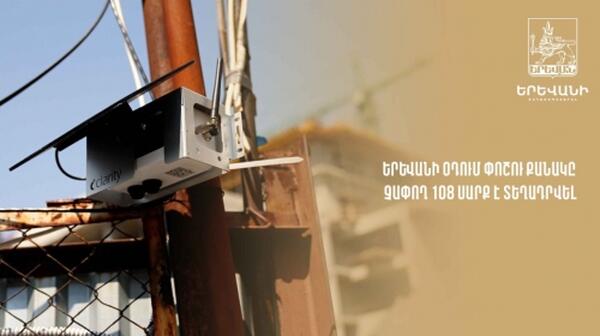
Yerevan is expanding air quality monitoring amid pollution levels exceeding established standards. Construction dust and vehicle emissions have been identified as the main sources of the problem, prompting the municipality to begin installing measuring devices at construction sites across the city.

At present, 108 devices are operating at Category 4 and 5 risk sites, and their readings are available online on the municipality’s official website. The highest pollution levels are recorded in the Erebuni, Kentron, and Shengavit districts, while Avan and Davtashen are noted as the cleanest.

As a long-term solution, the restoration and expansion of green spaces, as well as the creation of buffer forest areas, are being considered. Until such projects are implemented, city authorities are relying on daily oversight of construction site management, including the installation of dust-suppressing nets.

Comment from the AirQuality.am editorial team As became clear later, the authorities of Yerevan seriously underestimated the contribution of heating and transport.

Read the full article on ecolur.org

“108 dust monitors installed in Yerevan” on news.am

“Yerevan residents can monitor dust air pollution levels through a GIS system” on ecolur.org

Sources of Atmospheric Air Pollution in Yerevan

Sources of Atmospheric Air Pollution in Yerevan (machine translation)

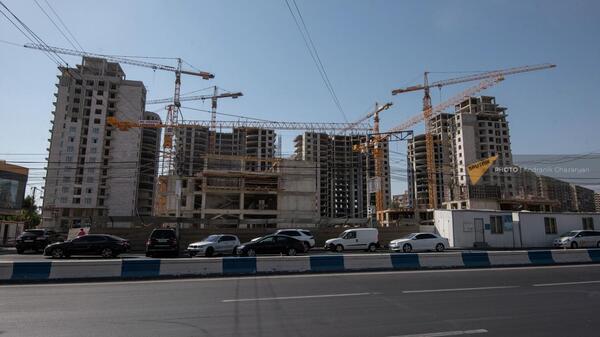
In Yerevan, air pollution by dust and nitrogen dioxide often exceeds the maximum permissible concentrations. The key sources of pollution are identified as construction, transport, mining activities, degraded lands, the Nubarashen landfill, industry, and energy; according to Yerevan’s 2023 Development Plan, about 400 organizations negatively affect the capital’s atmospheric air.

The construction boom after 2018 was accompanied by an increase in dust pollution: in 2023, 4,448 construction permits, 599 completion certificates, and 2,023 design permits were issued. Municipal requirements provide for covering construction sites with mesh and installing equipment for online air quality monitoring; however, observations show that not all developers comply with these standards.

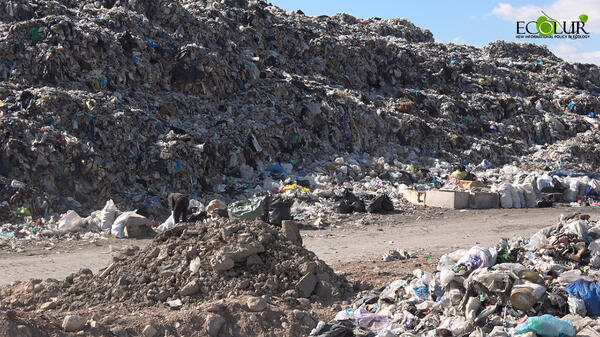
Yerevan’s vehicle fleet is estimated at about 600,000 cars, and the city authorities intend to switch public transport from diesel to compressed natural gas: currently, 140 vehicles run on diesel fuel and 490 on “blue fuel,” with 171 more new buses expected. Additional pressure comes from 17 non-metallic mineral deposits, mostly mined by open-pit methods near residential areas, as well as the 52-hectare Nubarashen landfill, where 290,000–320,000 tons of waste are transported annually and which is subject to closure.

Read the full article on ecolur.org

“The Environmental Damage of Yerevan's Mines and Its Economic Component” on ecolur.org

August 2024

How well has the “Yerevan Green City” Action Plan been implemented: a discussion between the municipality and civil society

How well has the “Yerevan Green City” Action Plan been implemented: a discussion between the municipality and civil society (machine translation)

In Yerevan, officials and civil society representatives discussed the progress of the “Yerevan Green City” Action Plan, approved by the Council of Elders in 2017 as part of the EBRD’s Green City program. For the capital, with a population of more than one million people, the key issues remain green spaces, air and water quality, transport, urban development, and waste management.

According to official data, the total area of Yerevan’s green territories is 6,760 hectares, of which 906.8 hectares are public green spaces; in 2022–2023, they increased by 35 hectares, reaching 8.3 square meters per person. Municipal representatives reported five new air monitoring stations, obligations for developers to install such devices, plans to replace old buses and expand gas-fueled transport, as well as a project to turn the Dalma Gardens into a 230-hectare park, which could raise the green-space indicator to 10.3 square meters per person.

Read the full article on ecolur.org

Yerevan Discusses the City Master Plan for 2024–2030

Yerevan Discusses the City Master Plan for 2024–2030 (machine translation)

On August 8, Yerevan City Hall hosted the second and final public hearings on the draft city master plan for 2024–2030 and the strategic environmental assessment report. The documents have been submitted for expert review and address key areas of urban development.

Issues raised included chaotic construction, the condition of green spaces, air quality, the sewage system, transport, waste management, and other urban environmental and infrastructure problems.

Read the full article on ecolur.org

July 2024

Nearly 250 High-Rise Buildings Are Being Constructed in Yerevan with Violations, 534 Reports Filed

Nearly 250 High-Rise Buildings Are Being Constructed in Yerevan with Violations, 534 Reports Filed (machine translation)

A total of 248 high-rise buildings are being constructed simultaneously in Yerevan, and violations have been identified at almost all sites, said Ruben Khodjoyan, deputy head of the Environmental Protection Department of the mayor’s office. In the first six months of 2024, 534 administrative offense reports were filed in connection with air pollution at construction sites; nearly all developers were fined.

Among the recorded violations, 147 cases involved the absence of special dust-collecting nets, while another 78 concerned the lack of air quality measurement devices. Fines range from 70,000 to 100,000 drams and increase for repeat violations; Gorik Avetisyan from the same department said that the mayor’s office has installed 60 air quality monitoring devices. The most common problems remain insufficient watering of sites, transporting loose materials without tarpaulins, and dirty truck wheels, against the backdrop of long-standing concerns about air pollution in the capital.

Read the full article on arka.am

June 2024

Yerevan City Hall has published air pollution data from construction sites on its website

Yerevan City Hall has published air pollution data from construction sites on its website (machine translation)

An online map showing dust air pollution indicators at 15 construction sites in the capital has appeared on the official Yerevan City Hall website, yerevan.am. The service is important as the first public tool for this kind of monitoring, although it does not yet provide a complete picture for the entire city.

Since September 1 of last year, the presence of sensor devices for monitoring air quality at construction sites of multi-apartment residential buildings has been mandatory by decision of the Council of Elders. Sensors have now been installed in the Kanaker-Zeytun, Davtashen, Avan, Nor Nork, and Ajapnyak districts; the largest number is in Kanaker-Zeytun, with 8 devices. They measure the concentration of dust particles up to 1, 2.5, and 10 micrometers per cubic meter of air, as well as humidity and temperature, with the ability to view both averaged and individual indicators.

At the same time, City Hall states that the platform makes it possible to track dust pollution levels across the entire city, but the available data is limited to 15 points, all of which are located at construction sites, presumably near pollution sources. Five sensors purchased by City Hall in 2022 to assess the environmental risks of new transport routes are currently not displaying data: their maintenance has not been paid for in recent months, and a contract with the company Clarity is required.

Read the full article on hetq.am

“Data on Dust Pollution Levels in Yerevan Will Be Available to Everyone” on ecolur.org

“Residents of Yerevan can now access the information platform "Dust Air Pollution Indicators"” on news.am

May 2024

Despite the Goal of the “Green City Action Plan,” Gyumri Remains Dusty

Despite the Goal of the “Green City Action Plan,” Gyumri Remains Dusty (machine translation)

Gyumri joined the EBRD Green Cities program in 2019, approving an action plan with a horizon through 2035: to improve air quality, water resources, land use, and adaptation to climate change. However, five years later, the concentration of dust in the city’s atmospheric air continues to exceed the maximum permissible level.

Representatives of civil society link the problem to road construction without site isolation, unpaved streets, water utility excavations, a lack of green spaces, and the use of tons of sand on icy roads in winter. Gevorg Petrosyan of the NGO “Biosophia” notes that Gyumri has only one air monitoring station, located, according to him, in one of the greenest parts of the city, yet even there dust levels are recorded at 1–2 times above the norm.

Separate questions arise regarding the accounting of green areas: the plan indicated 3.91 square meters per person, while new data exceed 13 square meters because a forest park outside the city was included in the calculation. Civic activists propose conducting real monitoring of green spaces, creating a registry of them, and developing forest belts around Gyumri, including the vacant northwestern areas and the riverside sections of the Akhuryan River.

Read the full article on ecolur.org

March 2024

Armenia Has the Dirtiest Air in the Region

Armenia Has the Dirtiest Air in the Region (machine translation)

In IQAir’s annual report for 2023, Armenia ranked 19th among the countries with the most polluted air, surpassing its neighbors on this indicator: Azerbaijan ranked 51st, and Georgia 61st. Only seven countries in the world met the World Health Organization’s air quality standards — Australia, Grenada, Iceland, Mauritius, New Zealand, Finland, and Estonia.

Naira Vardanyan, Candidate of Biological Sciences and environmentalist, links the dangerous excess of PM2.5 levels in Yerevan primarily to construction sites and construction dust. According to her, the pollution level in the capital exceeds the WHO’s annual average standard by 16 times, and over ten years mortality from cancer in Yerevan has increased by 65%.

The WHO estimates annual global deaths from air pollution at 8 million people. Among the necessary measures cited are compliance with sanitary standards at construction sites, covering the loads of heavy machinery, washing wheels before leaving construction sites, and regular dust suppression of the ტერიტორიes, but according to Vardanyan, these requirements are practically not being met.

Read the full article on golosarmenii.am

January 2024

Avinyan claims that the "alarming news" about air pollution in Yerevan does not reflect reality

Avinyan claims that the "alarming news" about air pollution in Yerevan does not reflect reality (machine translation)

At a press conference on December 29, Yerevan Mayor Tigran Avinyan stated that reports of severe air pollution in the city, published on various websites, do not correspond to reality. He referred to the air quality monitoring devices installed by the municipality and assured that Yerevan is not among the worst cities by this indicator.

At the same time, available measurements show that the beginning of the year in the center of the capital was accompanied by pollution levels above the norm: this is evident both from the Clarity sensor data near the circus and from IQAir readings from Northern Avenue and Lovers' Park. Of the five municipal sensors, two are currently unavailable due to a technical issue, while the stationary Hydrometeorology and Monitoring post at the Lusavorich–Agatangeghos intersection is recording excessive dust levels; the center reported that exceedances were also observed this week.

Avinyan also spoke about future sensors at construction sites and increasing fines for developers, which currently range from 70,000 to 200,000 drams. According to the mayor's office, such devices have not yet been installed, although the decision on them was made back on September 1; in parallel, the city authorities plan to create 250–300 hectares of new green areas over five years.

Comment from the AirQuality.am editorial team In the end, Yerevan City Hall's sensors also showed exceedances, and the information from them generally corresponded to the average readings of IQAir and other stations. Subsequently, the mayor's office was forced to acknowledge the problem. Therefore, we regard this statement as false.

Read the full article on hetq.am