Media Archive on Air Quality in Armenia — 2023

December 2023

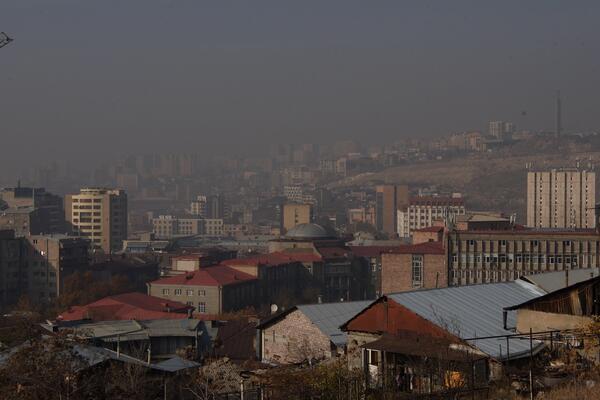
Air pollution index in Yerevan exceeds WHO standards by 12–16 times

Air pollution index in Yerevan exceeds WHO standards by 12–16 times (machine translation)

During the workweek, dangerously high air pollution levels were recorded in Yerevan based on the PM2.5 indicator — the concentration of fine particulate matter. This indicator is important for assessing air quality because these are the particles taken into account in WHO sanitary standards.

According to World Health Organization standards, the annual average PM2.5 level should not exceed 10 µg/m³, and the daily average should not exceed 25 µg/m³. According to The World Air Quality Index service, on December 8 the pollution level in Yerevan exceeded the WHO annual standard by 12–16 times.

Read the full article on ecolur.org

“Yerevan in fog, smoke, or dust: what the data reveal” on hetq.am

“Frequent exceedances of dust levels in central Yerevan” on ecolur.org

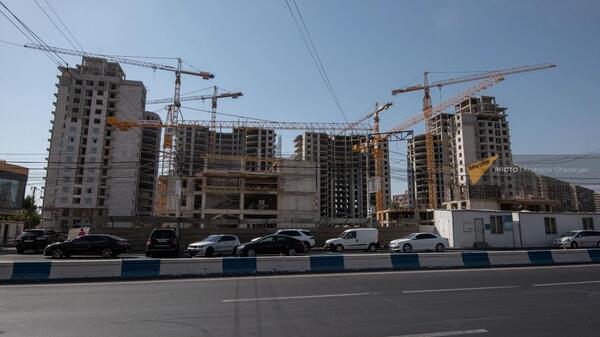
Air pollution around construction sites will be monitored in Yerevan

Air pollution around construction sites will be monitored in Yerevan (machine translation)

Yerevan City Hall is introducing air quality monitoring near construction sites using special devices. This approach is expected to enable municipal services to receive data directly from the sites and carry out inspections when pollution is detected.

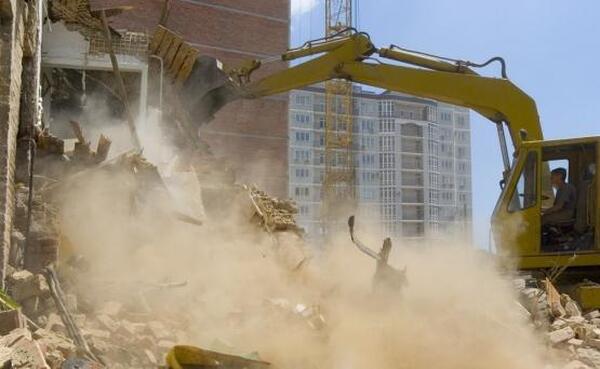
At a briefing meeting on December 4, it was also announced that four buildings were demolished in Yerevan last week: two in the Kentron administrative district, one in Malatia-Sebastia, and one in Nor Nork. Mayor Tigran Avinyan уточнил, представлены ли застройщикам четкие требования по проверке качества воздуха, и after receiving a positive response, emphasized the importance of оперативной информации с мест строительства.

Read the full article on news.am

September 2023

Yerevan City Hall continues inspections: four developers held accountable

Yerevan City Hall continues inspections: four developers held accountable (machine translation)

In Yerevan, four business entities have been held administratively liable for violating environmental requirements during construction. City Hall considers failure to comply with construction site management standards to be one of the main factors contributing to air pollution in the capital.

A representative of the Yerevan Territorial Department of the Environmental Protection and Subsoil Inspection said that 10 complaints were received through the hotline over the course of a week, and administrative proceedings were initiated for all of them; three cases were closed, while another three are still under review. There are about 900 Category IV sites in the city with minimal negative environmental impact, and active construction work is underway at 600 of them.

Since September 1, new rules for construction sites have been in effect: metal fencing at least 2 meters high, facade mesh with a density of 180 g/sq. m, and mobile air quality monitoring stations. Failure to comply with the requirements carries a fine of 100,000 drams, while violations related to the removal of construction waste are punishable by a fine of 50,000 drams; in the event of a repeat violation, the amounts are doubled.

Read the full article on am.sputniknews.ru

“Preventive measures to protect atmospheric air continue in Yerevan” on ecolur.org

From a smog-covered Ararat to an air monitoring network: a Russian designer’s project

From a smog-covered Ararat to an air monitoring network: a Russian designer’s project (machine translation)

Kristina Loginova, who moved from Russia to Armenia in May 2022, encountered air pollution that did not match her expectations of a mountainous country with clean air. After Ararat disappeared from view behind smog for a long time, she began collecting and installing air quality sensors and created the ArmAQI platform, where their readings can be tracked.

The first 10 devices and the website cost her 52,500 rubles; the designer assembled the map for the platform using code created by ChatGPT. After talking about the project, Loginova received about 40 applications from different cities in three days, including Gyumri, Vanadzor, and Goris, but emphasizes that her initiative remains “grassroots”: the sensors are installed at different heights and not necessarily near roads, so their data may differ from government measurements.

The problem with official monitoring in Armenia is that state stations are not connected to international hydrometeorological platforms, and the methods used provide daily or weekly averages rather than real-time data. According to a 2022 study by the Austrian Environment Agency, building one new automatic monitoring station can cost €150,000–300,000.

Read the full article on hetq.am

August 2023

Causes of Air Pollution in Armenia and Preventive Measures

Causes of Air Pollution in Armenia and Preventive Measures (machine translation)

Air pollution in Armenia remains high: over the past five years, the indicator has increased by 15%, and in a number of cities the dust content exceeds the maximum permissible limits. Specialists link the problem to the reduction of green areas, transport emissions, waste accumulation, and above all active construction; Gayane Shakhnazaryan, Deputy Director of the Center for Hydrometeorology and Monitoring, notes that the growth of urban development is accompanied by increased atmospheric pollution.

Victoria Burnazyan, Vice President of Ecolur, also points to the contribution of the mining industry: emissions are possible during explosions, from waste dumps, and from unreclaimed tailings reservoirs, where the dust may contain heavy metals and toxic substances. Doctor Samvel Ayrumyan links air pollution to short-term consequences such as allergic rhinitis, bronchitis, and asthma flare-ups, as well as to increased risks of cardiovascular diseases, strokes, and respiratory illnesses.

The country has 15 stationary, 1 transboundary, and 215 mobile monitoring posts in operation; however, the current system does not make it possible to determine at what hour the maximum concentration of pollutants is recorded, and automatic instruments are needed for this. This year, the Inspectorate for Nature Protection and Subsoil inspected 33 construction companies in Yerevan, found violations in 31 of them, and imposed fines of 150,000 drams, while another 16 people were fined 50,000 drams for transporting loose materials without an opaque covering.

Read the full article on ecolur.org

July 2023

E

CEE Bankwatch Network released a video on whether Yerevan and Gyumri are green cities (machine translation)

On July 15, 2023, CEE Bankwatch Network published the video “Are Yerevan and Gyumri Green Cities?”, prepared with the participation of EcoLur. It examines how well the green city action plans in Armenia’s largest cities align with goals for improving air quality, expanding green spaces, and managing waste.

Yerevan joined the EBRD Green Cities programme in 2016, becoming the first among the participating cities, while Gyumri joined in 2018. EcoLur notes that over the past five years air quality in the capital has deteriorated, in central Yerevan there are 3 square meters of green space per resident compared to the WHO minimum of 9 square meters, and the Nubarashen landfill does not comply with international sanitary standards for waste.

The video’s key message is addressed to the EBRD and local authorities: in the authors’ view, the bank should more consistently monitor the implementation of the green city plans and ensure the accessibility of information on municipal development, while local self-government bodies should involve residents in decision-making.

Read the full article on ecolur.org

May 2023

Civil society demands protection for Yerevan residents over the fire at the Nubarashen landfill

Civil society demands protection for Yerevan residents over the fire at the Nubarashen landfill (machine translation)

Representatives of Armenia’s civil society have appealed to the relevant state authorities, demanding that they ensure the safety of residents of Yerevan and nearby settlements following the fire at the Nubarashen landfill. The signatories describe the situation as an environmental and public health threat: the fire started on May 18, and by May 24 it had still not been extinguished, while the smoke had reached Yerevan’s Small Center.

The open letter states that the causes of the large-scale fire have not been officially identified; among the possible explanations mentioned is the accumulation of methane at the landfill. The Hydrometeorology and Monitoring Center warned that in the event of a fire, dioxins, polychlorinated biphenyls, polyaromatic hydrocarbons, and other pollutants could be released into the air, but there is no data on the actual composition of the emissions and no mobile monitoring of these substances in Yerevan.

The authors of the letter say that residents of homes near the landfill were not evacuated, children were not isolated, and the public did not receive clear instructions on how to protect themselves from the emissions. They propose creating an interagency working group to urgently extinguish the fire, inform the public, reduce health risks, and prepare measures that will help prevent similar fires and assess the threat of groundwater contamination.

Read the full article on ecolur.org

N

Air pollution measuring devices will be installed in Yerevan (machine translation)

Devices for measuring air pollution are planned to be installed in Yerevan. This step is part of the instrumental monitoring of the urban environment and may become the basis for a more accurate assessment of air quality.

The timeline for installation, the number of devices, their locations, and the responsible entities have not been specified. There is also no information on which pollutants will be measured or how the monitoring results will be used.

Read the full article on news.am

E

Dust and Nitrogen Dioxide Levels Exceeded Permissible Limits in Yerevan (machine translation)

Excessive concentrations of dust and nitrogen dioxide were recorded in the ambient air in Yerevan. The Center for Hydrometeorology and Monitoring of the Ministry of Environment presented data on the state of air pollution in the city for May 18–19, 2022.

In the Kentron administrative district, dust levels exceeded the maximum permissible concentration by 1.6 times, while in Nor Nork, nitrogen dioxide levels were 1.2 times above the limit. Sulfur dioxide did not exceed the established standard; however, compared with previous days, an increase in its concentration was observed at all monitoring stations.

Against the backdrop of the fire at the Nubarashen landfill, other harmful pollutants may also have entered the air, including dioxins, polychlorinated biphenyls, polyaromatic hydrocarbons, and other substances.

Read the full article on ecolur.org

February 2023

How Air Pollution Is Measured in Armenia and What Affects Its Quality

How Air Pollution Is Measured in Armenia and What Affects Its Quality (machine translation)

Yerevan remains one of the cities in Armenia with the most polluted air, and over the past five years the problem has become more noticeable due to transport, industry, and increased construction. The country lacks modern real-time monitoring systems, so air quality is assessed using daily average indicators from stationary and mobile stations; Yerevan alone has 45 such monitoring points.

Specialists from the Hydrometeorology and Monitoring Center test samples for dust, nitrogen dioxide, sulfur dioxide, and ground-level ozone. In the Kentron district, dust concentrations often exceed the maximum permissible level of 0.15 mg per cubic meter by 1.5 to 2 times, and in November–December 2022, nitrogen dioxide levels in Yerevan exceeded the permissible limit by 1.1 times. Factors contributing to pollution include the dry climate, a lack of green spaces, dense development, the growing number of cars, heating boilers, and the Nubarashen landfill.

The authorities are preparing to tighten oversight of construction sites: work standards and liability for violations may include fines and suspension of construction. The Inspectorate for Environmental Protection and Subsoil reported 483 violations over five years, fines totaling about $90,000, and the suspension of operations of 13 business entities.

Read the full article on am.sputniknews.ru

January 2023

E

The Problem of Air Pollution in Yerevan: Main Sources and Solutions (machine translation)

The environmental situation in Armenia’s capital has reached an alarming level, with the air pollution index significantly exceeding established standards. City residents regularly face dangerous concentrations of fine particulate matter, sulfur compounds, nitrogen compounds, and heavy metals, which, according to specialists, pose a direct threat to public health and contribute to the rise of serious diseases. The significance of this problem requires an immediate reconsideration of approaches to urban planning and enforcement of environmental legislation.

Experts identify large-scale construction and heavy traffic as the main factors contributing to the deterioration of air quality. During 2022, regulatory authorities recorded more than two hundred violations of construction rules related to the absence of dust suppression measures; however, low fines do not deter developers. The situation is further aggravated by the reduction of green spaces in favor of commercial development.

To normalize the situation, specialists call for the development of a unified state concept in which air purification becomes a priority task. Key proposed steps include mandatory large-scale greening comparable to the volume of construction, as well as involving citizens in separate waste collection and promoting alternative modes of transportation.

Read the full article on ecolur.org