
Air pollution is one of Armenia's major environmental problems and is especially noticeable in winter, when emissions from seasonal heating coincide with weather conditions that make it harder for pollutants to disperse. In large cities such as Yerevan, air quality is affected by vehicle exhaust, fuel combustion for heating, industry, construction, and dust from roads and surrounding landscapes.
«It is only fog, not smog» is a dangerous oversimplification. A white haze does not mean that the air is clean: fog and pollution can occur at the same time, and water droplets can interact with particles and gases in the air. Color and smell are unreliable too; harmful pollutants are not always visible and do not always have an odor. The important question is therefore not how the air looks, but what concentration measurements and weather data show.
In winter, Yerevan and the Ararat Valley often experience a temperature inversion: cold air near the surface lies beneath a layer of warmer air, weakening vertical mixing. An inversion does not create pollution, but it prevents emissions from transport, heating systems, industry and other sources from dispersing. Their concentrations near the surface can consequently increase, making it especially important to follow measured air quality during these periods.
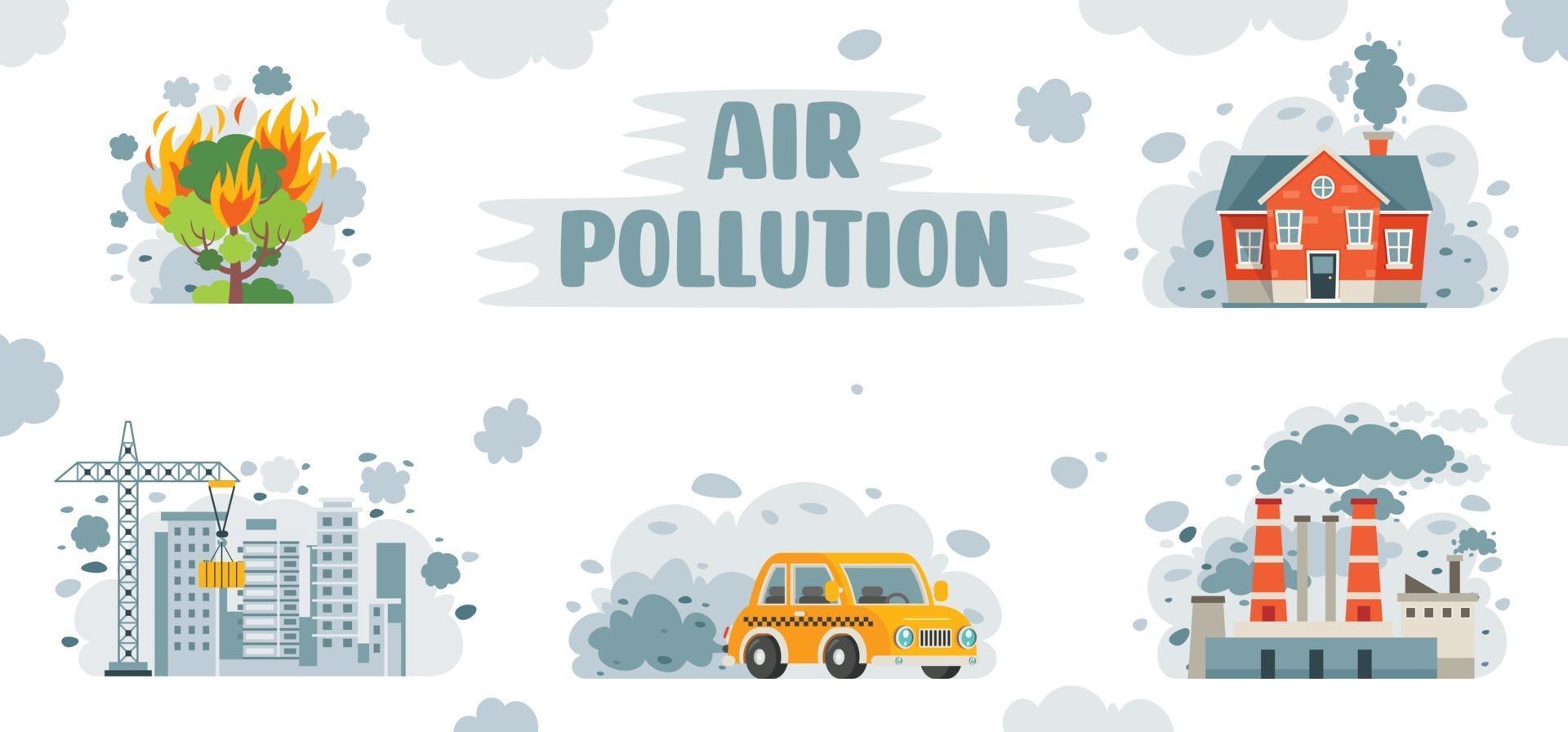
One source usually emits several pollutants, and the same pollutant can come from many sources. In this table, we have brought together the main pollutants and shown where they usually come from. Which sources have the greatest impact on the air depends on the area, time of day and season.
| Source | Typical pollutants | Where the pollutants come from |
|---|---|---|
| Transport | PM2.5, PM10, NOₓ, CO, VOCs, PAHs | Exhaust, tire and brake wear, resuspended road dust; gasoline evaporation during storage and refueling. |
| Road and soil dust | Mainly PM10, also PM2.5 | Exposed soil, fields and worn road surfaces; wind and traffic lift settled particles back into the air. |
| Heating and fuel combustion | PM2.5, CO, NOₓ, SO₂, VOCs, PAHs | The mix depends on the fuel and how completely it burns. Wood and coal produce smoke, gas produces nitrogen oxides, and sulfur in fuel produces SO₂. |
| Construction and earthworks | Mainly PM10, also PM2.5 | Building demolition, stone and concrete cutting, earthworks, transport and open storage of loose materials. |
| Industry and power generation | PM2.5, PM10, NOₓ, SO₂, CO, VOCs, PAHs | Fuel combustion, metallurgy, asphalt and bitumen work, evaporation of solvents, paints and varnishes; the mix of emissions depends on the process. |
| Fires and open burning | PM2.5, CO, VOCs, PAHs | Burning vegetation and waste; smoke and gases can travel far from the fire. |
| Atmospheric transport and formation | PM2.5, PM10, ozone, formaldehyde | Dust and smoke carried in from outside the city; ozone, secondary particles and formaldehyde forming from precursor gases. |
NOₓ means nitrogen oxides, including NO₂; VOCs are volatile organic compounds, including formaldehyde; PAHs are polycyclic aromatic hydrocarbons. The mix of emissions varies even between sources of the same type.
Particulate matter (PM) is a mixture of solid particles and liquid droplets suspended in the air. PM10 includes inhalable particles with an aerodynamic diameter of up to 10 micrometers, while PM2.5 is the finer fraction with a diameter of up to 2.5 micrometers.
PM10 and especially PM2.5 can penetrate deep into the lungs; some components of PM2.5 may enter the bloodstream. Short- and long-term exposure is associated with respiratory and cardiovascular disease. Particles may be emitted directly by smoke and combustion or form in the atmosphere from other substances.
Under the standards currently in force, Armenia does not yet have separate limits for PM2.5 and PM10. From 1 November 2027, the limits will be 25 µg/m³ over 24 hours and 10 µg/m³ annually for PM2.5, and 45 and 20 µg/m³ respectively for PM10. The daily limit may be exceeded no more than 18 times per year; stricter values follow in 2035.
PM2.5 and PM10 concentrations are used to calculate the Air Quality Index (AQI) on our website.
Learn more about particulate matter, measurement units and health effects.
Dust is a mixture of particles of different sizes and compositions, including PM10 and PM2.5. Sources include exposed soil and fields, road surface deterioration, tire and brake wear, earthworks, building demolition, stone and concrete cutting, and the transport and open storage of loose materials. Wind can bring dust from outside the city, while traffic and gusts of wind can lift settled particles back into the air.
Large dust particles irritate the eyes and upper airways. Fine particles, especially PM2.5, pose a greater health risk: they penetrate deeper into the lungs and are associated with respiratory and cardiovascular diseases. However, the hazard from dust also depends on its composition, concentration and duration of exposure; it cannot be considered harmless simply because it is natural or its particles are large.
Covering loose materials, wetting during work and cleaning roads with dust capture help reduce dust emissions; dry sweeping can lift dust back into the air.
The current 24-hour average maximum permissible concentration (MPC) for total dust is 150 µg/m³. From 1 November 2027, separate PM10 and PM2.5 standards will apply instead.
Nitrogen dioxide belongs to the nitrogen oxides (NOx) group. Some NO2 is emitted directly, while some forms in the air through the oxidation of nitric oxide (NO). It irritates the airways, can worsen asthma symptoms and contributes to the formation of ozone and secondary particles.
Sources of nitrogen oxides involve fuel combustion: transport, including diesel cars, buses and trucks, heating systems, industry and power generation. Concentrations are often elevated near busy roads, especially with dense development and light winds; emissions depend on engine operating conditions and how well exhaust treatment systems work. Indoors, NO2 can come from gas stoves and heaters that do not vent combustion products outdoors. A gas flame may look clean and produce no visible soot while still emitting nitrogen oxides. Well-maintained appliances, adequate ventilation and a kitchen extractor hood vented outdoors help reduce exposure.
Government NO2 monitoring data are published on AirQuality.am when available. Its concentration can also be used to calculate the AQI. The current 24-hour average MPC for NO2 is 40 µg/m³. From 1 November 2027, limits of 200 µg/m³ over 1 hour, 50 µg/m³ over 24 hours and an annual average of 20 µg/m³ will apply.
SO2 mainly comes from burning sulfur-containing fuels and certain industrial processes. The gas irritates the airways and can trigger asthma flare-ups. In the atmosphere, it also contributes to the formation of secondary particles.
Sulfur can be present in coal and petroleum fuels such as heavy fuel oil, diesel and gasoline. During combustion it oxidizes, mainly forming SO2: the more sulfur a fuel contains, the higher the potential emissions when the same amount is burned. Reducing emissions therefore involves removing sulfur at the refinery, using low-sulfur fuels and, at large installations, treating flue gases.
Euro 5 and Euro 6 vehicle standards limit tailpipe emissions, including nitrogen oxides, carbon monoxide, hydrocarbons and particles; separate fuel quality requirements regulate sulfur content. These measures are connected: sulfur reduces the effectiveness of catalytic converters, so low-sulfur fuel helps exhaust treatment systems work properly. A conventional vehicle catalytic converter does not replace sulfur removal from fuel: its main purpose is to reduce emissions of other pollutants.
Government SO2 monitoring data are published on AirQuality.am when available. The current 24-hour average MPC is 50 µg/m³. From 1 November 2027, limits of 350 µg/m³ over 1 hour, 50 µg/m³ over 24 hours and an annual average of 20 µg/m³ will apply.
Ground-level ozone is usually not emitted directly. It forms in the atmosphere under sunlight from nitrogen oxides, volatile organic compounds and other precursor gases. Its concentration can therefore be high even away from the original emission source.
The main sources of nitrogen oxides are fuel combustion in vehicle engines, boiler houses, power plants and industrial installations. Volatile organic compounds (VOCs) come from exhaust, gasoline evaporation during storage and refueling, the use of solvents, paints and varnishes, and industrial processes. These precursor gases can be carried by wind and form ozone at a distance from where they were emitted.
Ozone irritates the airways, makes breathing harder, can worsen asthma and reduce lung function. High concentrations occur more often in sunny weather. The current 24-hour average MPC for ozone is 30 µg/m³. From 1 November 2027, a limit of 100 µg/m³ for the maximum daily 8-hour mean concentration will apply.
PAHs are a group of organic compounds with different properties. Some, including benzo[a]pyrene, are carcinogenic. In air, they occur as gases or attach to particulate matter. Their hazards are reviewed by the International Agency for Research on Cancer. The current 24-hour average MPC for benzo[a]pyrene is 1 ng/m³. From 1 November 2027, its annual limit will be 1 ng/m³.
PAHs form through incomplete combustion of wood, coal, petroleum products, waste and other organic materials. Sources relevant to Armenia include vehicle exhaust, stove heating, fires, open burning, asphalt and bitumen work, foundries, metallurgy and fuel-burning installations. The EPA lists typical sources.
Indoors, PAHs can come from tobacco smoke, faulty heaters, burnt or fried food and cooking over an open flame. Avoid smoking indoors, maintain heating equipment, and use an extractor fan or ventilation when outdoor air is sufficiently clean.
Formaldehyde is a volatile organic compound (VOC). It irritates the eyes and airways, and long-term exposure is associated with an increased risk of certain cancers. Armenia's current maximum one-time MPC is 35 µg/m³ and its 24-hour average MPC is 3 µg/m³. The new system taking effect on 1 November 2027 does not specify a separate formaldehyde standard.
Formaldehyde enters outdoor air when fuels and other organic materials burn incompletely — in vehicle exhaust, smoke from wood and coal, fires and open waste burning. It can also be released by some industrial processes. In Armenia, formaldehyde may be used in the manufacture of adhesives, paints and coatings, wood-based panels and furniture. Formaldehyde itself is imported into the country, while a substantial volume of particleboard and similar panels comes from abroad.
Formaldehyde does not only enter the air directly from these sources. It can also form during the day as a product of the photochemical oxidation of other VOCs, including hydrocarbons in vehicle exhaust and fuel vapors, with the aid of sunlight.
Indoors, formaldehyde can be released by building and finishing materials, as well as furniture made from particleboard and other pressed-wood products manufactured with formaldehyde-based resins. For most residents, new furniture is a more likely source of exposure than large-scale formaldehyde production. It is therefore worth choosing low-emitting furniture and materials and providing adequate ventilation when outdoor air quality makes airing the room appropriate.
Carbon monoxide is a colorless, odorless gas produced by incomplete fuel combustion. Transport is its main outdoor urban source, but especially dangerous concentrations can occur indoors with faulty heating and poor venting. CO prevents the blood from carrying oxygen effectively and at high concentrations can cause loss of consciousness and death. The current maximum one-time MPC is 5 mg/m³ and the 24-hour average MPC is 3 mg/m³. From 1 November 2027, limits of 10 mg/m³ for the maximum daily 8-hour mean and 4 mg/m³ over 24 hours will apply. Learn more from the WHO.
Carbon dioxide should not be confused with carbon monoxide: at ordinary concentrations, CO₂ is not treated as a toxic urban air pollutant and is not included in the AQI. Outdoors, its accumulation primarily affects the climate; indoors, CO₂ is used as an approximate indicator of ventilation, with high readings often showing that more fresh air is needed. Learn more from the EPA.
Loading comments…