Media Archive on Air Quality in Armenia — 2026

September 2026

A “Dust Waterfall” from Unfinished Buildings: How Much It Costs to Pollute the Air

A “Dust Waterfall” from Unfinished Buildings: How Much It Costs to Pollute the Air (machine translation)

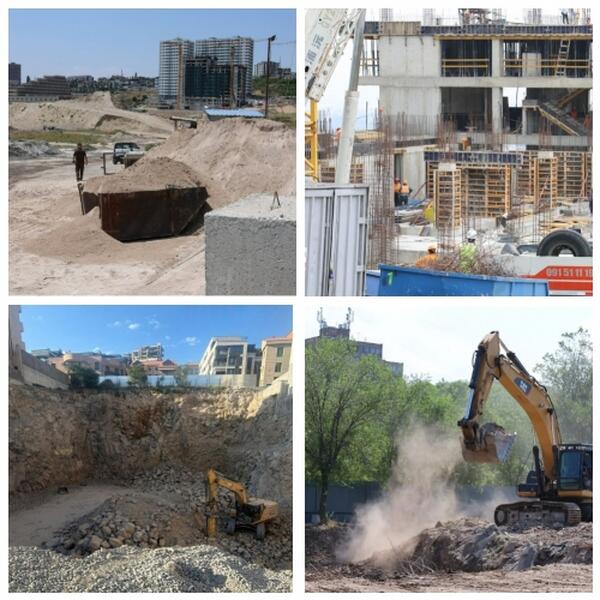
Yerevan resident Lusine Mkrtchyan filmed dust pouring down from unfinished buildings owned by ML Mining in Avan, next to the fields of the Football Academy where children train. The construction site is located about 300 meters from the academy, and this case shows how visible the problem of construction dust remains in the city.

Yerevan Municipality requires developers to use dust-catching nets, water cannons, dust suppression devices, store materials in enclosed areas, and install air quality monitoring equipment. Previously, fines ranged from 70,000 to 100,000 drams, which the municipality considered disproportionate to the costs of complying with the standards; as of August 29, 2026, a first violation carries a fine of 1.5–2 million drams, a repeat violation within a year carries a fine of 3–4 million drams, and work may be suspended for 5, 10, or up to 30 working days.

On the municipality’s page for the ML Mining construction site near the Football Academy, no air quality monitoring device was listed, and the video shows incomplete equipment. Ruben Khojayan, deputy head of the Urban Planning and Land Control Department, said that a water cannon, nets, and a connected online sensor had previously been recorded at this address, and called what was seen in the video unacceptable; after an inspection, the municipality provided photographs showing that, as of September 11, 2026, the site was equipped with nets and a water cannon.

Read the full article on hetq.am →

“The Inspectorate Distorts the Facts: “ML Mining” Continued Polluting the Air After Being Fined” on hetq.am →

Two major Syunik mining companies respond to study by Czech NGO Arnika

Two major Syunik mining companies respond to study by Czech NGO Arnika (machine translation)

The Zangezur Copper-Molybdenum Combine and the Kapan Mining and Processing Plant have responded to the findings of the Czech organization Arnika on environmental pollution and the impact of heavy metals in the Kapan and Kajaran areas. The study was accompanied by recommendations for authorities, communities, and companies, including the installation of publicly accessible real-time air quality monitors, dust suppression measures, and the greening of tailings dam surfaces.

ZCMC, through its head of public relations, Araik Margaryan, questioned the methodology, the selection and storage of samples, as well as the export of biological samples to the Czech Republic, stating that the work does not meet the criteria for reliable scientific conclusions. David Danielyan, the general director of the Kapan MPP, also described the analysis as lacking a standard comparative methodological basis and said that some of the proposals are already reflected in current regulations; the company claims that it had proposed to Arnika representatives in Syunik and residents of Geghanush to compare monitoring data, but received no response.

Read the full article on hetq.am →

Avinyan announces winner of Nubarashen waste plant tender

Avinyan announces winner of Nubarashen waste plant tender (machine translation)

Yerevan’s mayor said a consortium of Chinese, Arab and Armenian companies had won the tender. The scope of work still needs to be agreed and contracts signed.

Read the full article on azatutyun.am →

“A1+ publishes video of Avinyan’s waste plant tender announcement” on a1plus.am →

“Consortium selected for Yerevan waste processing plant” on civilnet.am →

“Tender winner to finance waste plant construction” on panorama.am →

August 2026

Environmental Provisions in the Armenian Government’s 2026–2031 Program

Environmental Provisions in the Armenian Government’s 2026–2031 Program (machine translation)

On August 25, the National Assembly of Armenia adopted the government program for 2026–2031, which includes a separate section devoted to environmental policy. The government defines its goals as the effective management of natural resources, the conservation of biodiversity, and the reduction of negative impacts on the environment, while also linking this course to Armenia’s upcoming presidency of COP17 of the UN Convention on Biological Diversity starting in October 2026.

The environmental section includes the harmonization of legislation with EU directives, the development of climate policy and economic mechanisms for reducing greenhouse gas emissions, including a carbon pricing system. Also planned are a nationwide air quality monitoring system with 16 modern stations and a reference laboratory, the expansion of 24/7 radiation monitoring, limiting water abstraction from the Ararat artesian basin to 926 million cubic meters per year, ecosystem-based management of Lake Sevan, about 10,000 hectares of afforestation and reforestation, the digitalization of environmental permits, and the strengthening of environmental education.

Read the full article on ecolur.org →

EU and UN launch €2.47 million air quality monitoring program in Armenia

EU and UN launch €2.47 million air quality monitoring program in Armenia (machine translation)

The European Union, UN agencies, and the Government of Armenia officially launched the EU4Clean Air in Armenia program on August 19, aimed at modernizing the national air quality monitoring system and strengthening pollution control. The project will run until February 2029; the EU’s contribution is €2 million, with a total budget of around €2.47 million.

The program is being implemented by UNDP, WHO, the United Nations Economic Commission for Europe, and the Environment Agency Austria in cooperation with Armenian government bodies. Plans include installing at least two new monitoring stations in line with EU technical requirements, establishing a National Reference Laboratory, developing data collection and analysis, training specialists, and launching an air quality portal and mobile application.

Read the full article on arka.am →

“EU and UN Launch Air Quality Monitoring Modernization Program in Armenia” on newsarmenia.am →

“EU and UN partners launch initiative in Armenia to improve air quality” on news.am →

Yerevan construction sites fined 1.7 million drams for dust emissions

Yerevan construction sites fined 1.7 million drams for dust emissions (machine translation)

The Nature Protection and Subsoil Inspection Body found violations of air quality regulations at construction sites in various administrative districts of Yerevan. Following inspections conducted from July 27 to August 13, businesses were fined a total of 1.7 million drams.

The inspections were carried out to reduce dust emissions, including in response to complaints from residents. Dust-control equipment was not used during grinding, sites were not watered in warm weather, piles of sand were left uncovered, and fencing was missing in some places. Work in violation of the regulations was suspended, administrative reports were drawn up for the violations, and monitoring is ongoing.

Read the full article on ecolur.org →

July 2026

Fines of 3 million drams for violations of atmospheric air protection requirements

Fines of 3 million drams for violations of atmospheric air protection requirements (machine translation)

Armenia’s Environmental Protection and Mining Inspection Body reported 45 violations of atmospheric air protection requirements identified from June 22 to July 10, 2026, in Yerevan and several regions. As a result of intensified inspections, administrative fines totaling 3 million 150 thousand drams were imposed.

The inspections concerned the illegal transportation of fertile topsoil, the transportation of bulk materials and construction waste without dustproof covers, as well as compliance with standards at construction sites. Most cases involved the transportation of bulk materials without protective covers: 12 in Yerevan, 13 in Armavir Province, 3 in Kotayk Province, 4 in Gegharkunik Province, and 1 in Aragatsotn Province; violations at construction sites were recorded in Yerevan, Kotayk, and Aragatsotn, while 2 cases of illegal transportation of fertile topsoil were also identified in Kotayk Province.

Read the full article on ecolur.org →

“Fines totaling 3.15 million drams imposed for air pollution in Armenia” on arka.am →

““There Should Be No More Excuses”: Avinyan on Violations at Construction Sites” on azatutyun.am →

Armenia’s Urban Development Committee: Dust Suppression Measures at Construction Sites Are Mandatory

Armenia’s Urban Development Committee: Dust Suppression Measures at Construction Sites Are Mandatory (machine translation)

In all settlements across Armenia, developers are required to control emissions from construction sites throughout the entire period of construction. The requirement is set out in the construction standards “Organization of Construction Works,” adopted in January 2026. The new regulations have been in force for a month, and developers were given time to prepare in advance.

To suppress dust, developers must use air purification systems, dust collection equipment and devices that generate water mist, and install air quality monitoring instruments at construction sites. Temporary roads must have a hard surface, while other areas must be covered with a layer of crushed stone. Regular cleaning, dust barriers, and compliance with rules for storing and transporting materials are also mandatory. The Urban Development Committee believes that complying with the standards will minimize the contribution of construction work to air pollution.

Read the full article on news.am →

June 2026

Yerevan Steps Up Oversight of Air Quality Protection During Construction Work

Yerevan Steps Up Oversight of Air Quality Protection During Construction Work (machine translation)

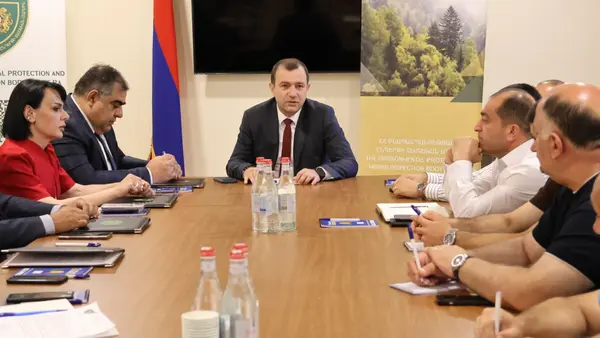
At a meeting on June 30, Hovhannes Martirosyan, head of Armenia’s Environmental Protection and Subsoil Inspection Body, called for strict compliance with environmental requirements during construction and improvement works in Yerevan. He paid particular attention to measures to reduce dust emissions during building façade work, paving, curb installation, utility construction and repairs to underground pedestrian passages.

Representatives of the Inspection Body and the mayor’s office agreed to conduct joint inspections in all administrative districts of the capital. The inspections are intended to help identify violations at an early stage, prevent dust emissions and ensure that businesses comply with environmental legislation.

Read the full article on news.am →

Avinyan compared Yerevan to a "pot with a lid"

Avinyan compared Yerevan to a "pot with a lid" (machine translation)

Yerevan Mayor Tigran Avinyan stated that air pollution in the capital worsens during the cold season due to an atmospheric inversion layer, comparing the city to a "pot with a lid." According to him, this natural and climatic phenomenon cannot be eliminated, but the situation can be mitigated by reducing vehicle emissions and traffic congestion. He also noted that the problem affects not only Yerevan but other settlements in the Ararat Valley as well. The article mentions that Avinyan had previously linked air quality to emissions from neighboring countries. Environmentalist Kristina Vardanyan, for her part, had also spoken about worsening air quality and emphasized the role of trees as a natural filter.

Comment from the AirQuality.am editorial team The mayor claims that the problem lies in the geographic location, but we believe that in doing so he is absolving himself of responsibility for failing to implement programs for cleaner heating, transport regulation, and construction oversight. Atmospheric phenomena only intensify the impact of pollution factors; they do not explain them.

Read the full article on newsarmenia.am →

April 2026

New standards and methodologies for assessing ambient air quality will take effect starting in 2027

New standards and methodologies for assessing ambient air quality will take effect starting in 2027 (machine translation)

The Armenian government has introduced amendments to a number of decisions: starting on November 1, 2027, new standards and methodologies for assessing ambient air quality will take effect. As part of a comprehensive measures program for 2025–2030, the air quality monitoring system is set to be модернизация, including the purchase of 14 stationary stations, 6 of them for Yerevan. In 2025, the Ministry of Environment was allocated 300 million drams to purchase two air quality assessment stations. These two stations have been installed in Yerevan (Kentron administrative district and a park in Kanaker-Zeytun) and are undergoing testing and calibration. They are expected to enable more accurate measurement of key pollutants and provide real-time data.

Read the full article on hetq.am →

March 2026

Mayor: Air quality in Yerevan has improved despite construction and cars

Mayor: Air quality in Yerevan has improved despite construction and cars (machine translation)

Yerevan Mayor Tigran Avinyan stated that the level of air pollution in the city is now lower than in November, despite the active season of construction, vehicle traffic, and other anthropogenic sources of pollution. According to him, the changes are linked to seasonal atmospheric conditions that affect the concentration of pollutants near the ground.

Avinyan explained that from November to March, air quality in Yerevan is largely determined by the height of the atmospheric layer: during this period, he said, it decreases from about 1,200 meters to 80–100 meters, causing pollution to concentrate closer to the ground. He noted that this phenomenon is characteristic not only of Yerevan, but of the entire Ararat Valley, including Vedi and Artashat, as well as adjacent territories of Turkey.

The mayor emphasized that the municipality publishes open data on air quality and forecasts for the coming days and week. According to him, as temperatures rise, the atmospheric layer increases to 2,000 meters, and the level of pollution observed in November is no longer recorded.

Comment from the AirQuality.am editorial team Claims on the level of "snow melts in spring, so there is no need to clear it away." We believe that in this way the mayor's office is absolving itself of responsibility for failing to implement programs to introduce more environmentally friendly heating and to control transport and construction. Atmospheric phenomena only amplify the impact of pollution factors; they do not explain them away.

Read the full article on news.am →

“Yerevan City Hall claims the air was cleaner in February 2026 than last year” on am.sputniknews.ru →

Not tree felling, but replacement: Begoyan responds to critics

Not tree felling, but replacement: Begoyan responds to critics (machine translation)

Armen Begoyan, director of the municipal organization “Greening and Environmental Protection,” said that trees on Paronyan and Proshyan streets are not being felled, but that diseased elms are being replaced with sophoras. According to him, each new sapling costs 91,500 drams, and the choice of trees is approved by scientists and professors on the organization’s council. Begoyan also claims that all trees slated for felling are inspected with a resistograph.

Activists and Kristine Vardanyan, an opposition member of the Council of Elders, dispute the city authorities’ actions and say that healthy, young trees are being felled. Vardanyan also questions whether the municipality’s specialists are trained to use the recently acquired device and criticizes the choice of ornamental species for the streets, arguing that in conditions of air pollution they may not perform a sanitary function.

Read the full article on azatutyun.am →

February 2026

Making Air Visible: Community Response to the Pollution Problem in Armenia

Making Air Visible: Community Response to the Pollution Problem in Armenia (machine translation)

The article describes winter air pollution in Yerevan, when smog and temperature inversions trap pollutants near the ground and residents regularly record “unhealthy” readings. AirQuality.am, created by Anton Vlasov, brings together fragmented air-quality data from municipal sensors, volunteer DIY networks, weather stations, and independent monitoring platforms, making it accessible and easy to understand. The platform publishes hourly updates, as well as open raw and processed datasets with documentation. The ArmAQI initiative and other volunteer networks expand sensor coverage across city districts. The project encourages residents to install their own sensors, share data, and engage with authorities on measures to reduce dust and waste burning and to expand green spaces.

Read the full article on airgradient.com →

Discussion: Dust, smoke and tree felling — who is responsible for Yerevan’s struggle to breathe?

Discussion: Dust, smoke and tree felling — who is responsible for Yerevan’s struggle to breathe? (machine translation)

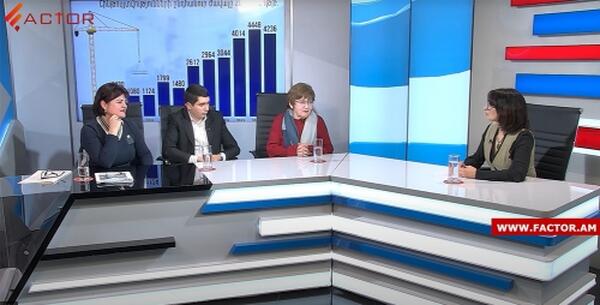
Yerevan’s problems with the construction boom, tree felling, a growing number of cars, dust and smoke are worsening. Criticism of the city authorities intensified in 2025 amid these issues and fires at the Nubarashen landfill.

Nearly 1,600 trees were felled in the city over the year, while the number of cars increased by 12,000. Over the past decade, the number of construction permits tripled, from 1,430 to 4,236. These issues were discussed by Inga Zarafyan, chair of the EcoLur NGO; Kristina Vardanyan, a member of the Yerevan Council of Elders; and Gorik Avetisyan, deputy head of the Yerevan Municipality’s Nature Protection Department.

Read the full article on ecolur.org →

Avinyan called for sharing air quality data so that “half-baked thoughts are voiced less often”

Avinyan called for sharing air quality data so that “half-baked thoughts are voiced less often” (machine translation)

Yerevan Mayor Tigran Avinyan stated that the municipality should regularly share data on the city’s air quality with the public. According to him, the municipality collects the largest volume of such information, including through installed sensors, and this data makes it possible to observe seasonal changes, especially from November to March. Avinyan emphasized the importance of understanding what portion of air quality deterioration is linked to anthropogenic factors in order to shape policy based on the accumulated information. He noted that the issue of air pollution requires detailed study and that there are many unprofessional assessments surrounding it. Expert Kristina Vardanyan said that air quality in Yerevan is deteriorating and that tree cutting is depriving the city of its natural “filter” against pollution.

Comment from the AirQuality.am editorial team The municipality strongly dislikes the work of activists and websites like ours, yet no real discussion is taking place. We analyze the data, and it shows that the municipality is either deliberately avoiding politically inconvenient issues or is completely incompetent on the matter.

Read the full article on newsarmenia.am →

Yerevan Has Nothing to Breathe: How “New-Wave Gardens” Can Become a Remedy for Smog and Stress

Yerevan Has Nothing to Breathe: How “New-Wave Gardens” Can Become a Remedy for Smog and Stress (machine translation)

Air pollution in Yerevan has intensified, and one proposed solution is the development of “new-wave gardens”—nature-like green spaces made up of native, drought-tolerant plants. Ecologist and agronomist Zoya Dutova explains that such gardens can become the city’s “lungs,” support biodiversity, and provide more shade while requiring less irrigation and fewer chemicals. She notes that air quality is also tied to greening policy: the city is being built up, former sanitary standards have lost force, and WHO recommendations on green-space provision are not закреплены in law. Mass tree felling and the loss of forests on the slopes (Monument/Victory Park and Nork) have deprived the city of natural barriers, while simply planting trees is not always possible due to soil erosion. Private projects like Goght Urban Valley demonstrate an approach to greening that preserves existing plantings and selects species suited to local conditions. However, without systemic changes in urban planning, even widespread adoption of such gardens will not fully solve the smog problem.

Read the full article on newsarmenia.am →

Trees Instead of Factories: Yerevan Residents предложили Their Own Ways to Clean the Air in the Capital

Trees Instead of Factories: Yerevan Residents предложили Their Own Ways to Clean the Air in the Capital (machine translation)

Nearly 1,900 Yerevan residents took part in a Telegram channel poll by “YerevanyCh” on how to mitigate air pollution in the capital. The poll was prompted by Mayor Tigran Avinyan’s statement that it is impossible to fully solve the problem due to factors beyond the city authorities’ control. Respondents most often cited mass tree planting and the creation of new parks, followed by strict control of construction dust. In the comments, residents link worsening winter air quality to widespread burning of trash, plastic, tires, and the use of stove heating. Proposed measures include fines and enforcement against waste burning, switching to gas/electric heating, expanding gasification, and greening to combat summer dust.

Read the full article on newsarmenia.am →

New EcoLur Video: Nubarashen — A Burning Landfill. How to Save Yerevan

New EcoLur Video: Nubarashen — A Burning Landfill. How to Save Yerevan (machine translation)

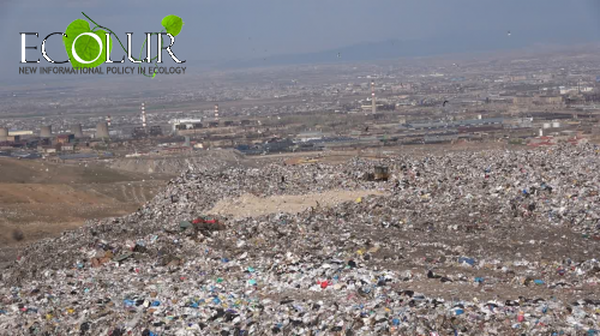
The new EcoLur video explores the problems of the Nubarashen landfill and ways to address them. Waste management expert Harutyun Alpetyan, a lecturer at the Jacobian Center for Environmental Studies at the American University of Armenia, presents several possible solutions.

The video was produced by the EcoLur Information NGO as part of the program “New Challenges to Yerevan’s Development and Opportunities to Overcome Them.” The program was implemented in cooperation with the international CEE Bankwatch Network.

Read the full article on ecolur.org →

January 2026

Air pollution and traffic jams named the main problems of Yerevan in a GALLUP poll

Air pollution and traffic jams named the main problems of Yerevan in a GALLUP poll (machine translation)

About 30% of participants in a GALLUP poll named air pollution as Yerevan’s most important problem. This was reported by Aram Navasardyan, head of the Armenian office of the GALLUP International Association, as he presented the results of the telephone survey.

Among the key urban problems, 26.5% of respondents pointed to traffic jams, 22.6% to poor road conditions, 16.3% to garbage collection, and 15% to the public transport situation. Another 82% of those surveyed said that traffic jams in Yerevan increased in 2025; 4.5% believe the opposite, while 11.6% noticed no changes. The poll was conducted on January 19–23 and involved 601 respondents.

Read the full article on newsarmenia.am →

“Air pollution, traffic jams and more: what did Yerevan residents complain about in the survey?” on am.sputniknews.ru →

“Yerevan residents named poor air quality the city’s main problem — Telegram channel “YerevanyCh” survey” on newsarmenia.am →

Ambient Air: Key Issues

Ambient Air: Key Issues (machine translation)

In 2025, Armenia recorded 617 violations related to the protection of ambient air, compared with 397 the previous year. Hovhannes Martirosyan, head of the Environmental Protection and Subsoil Inspectorate, said that total fines amounted to 34.98 million drams, while the damage to air quality was estimated at approximately 160 million drams.

In Yerevan, 217 violations were identified, including 99 in the construction sector and 39 cases of burning. Across the country, 226 cases of burning stubble, leaves, waste, and cables were recorded. The Inspectorate conducted 225 PM2.5 and PM10 measurements in the capital: in five cases, readings exceeded the standard by more than five times, and in 25 cases, by up to five times. In 2025, the agency also issued 15 orders suspending activities related to air protection; six were revoked after the violations were remedied.

Martirosyan said that, based on the agency’s monitoring results, there was no high level of pollution in the country, and noted that instruments used on different platforms may vary in accuracy. To obtain more accurate data, two stationary monitoring stations costing around 300 million drams are being installed in Yerevan with support from the Japanese government. The head of the agency cited temperature inversions, a lack of green spaces, and construction among the factors that may affect air quality in the capital. Requirements to control dust at construction sites have been introduced and will be incorporated into environmental standards.

Read the full article on ecolur.org →

Six Automatic Stations: Armenia Steps Up Control of Air Quality

Six Automatic Stations: Armenia Steps Up Control of Air Quality (machine translation)

Armenia has approved a comprehensive atmospheric air protection program for 2025–2030. It предусматривает modernization of air quality monitoring and the introduction of mandatory requirements for the use of dust-suppression equipment in construction and the mining industry. Two automatic monitoring stations have already been installed in Yerevan, and the first data are expected soon. Under a grant agreement with the Japanese government, three more stations are planned to be supplied, and one will be purchased from the state budget, bringing the total in the capital to six. This is intended to ensure comprehensive, citywide air-quality monitoring in line with international standards. Armhydromet of the Ministry of Environment is authorized to officially publish atmospheric air quality indicators and inform the public.

Read the full article on news.am →

Avinyan: It is impossible to completely solve Yerevan’s air pollution problem

Avinyan: It is impossible to completely solve Yerevan’s air pollution problem (machine translation)

Yerevan Mayor Tigran Avinyan said that it is impossible to fully solve the capital’s air pollution problem due to factors beyond the city authorities’ control. According to him, during the cold season, concentrations of dust and pollutants rise sharply because the inversion layer (“atmospheric ceiling”) lowers. Air quality is also significantly affected by emissions coming from neighboring countries, and the mayor estimates that external emissions exceed internal ones. Avinyan noted that restrictive measures can only partially mitigate the deterioration of air quality. Expert Kristina Vardanyan believes that air quality in Yerevan continues to worsen, with children, the elderly, and people with chronic illnesses being the most vulnerable; meanwhile, the protective role of trees is reduced by the cutting of green spaces.

Read the full article on newsarmenia.am →

“Avinyan: Yerevan’s air quality problem has existed for decades; no one talked about it” on news.am →