
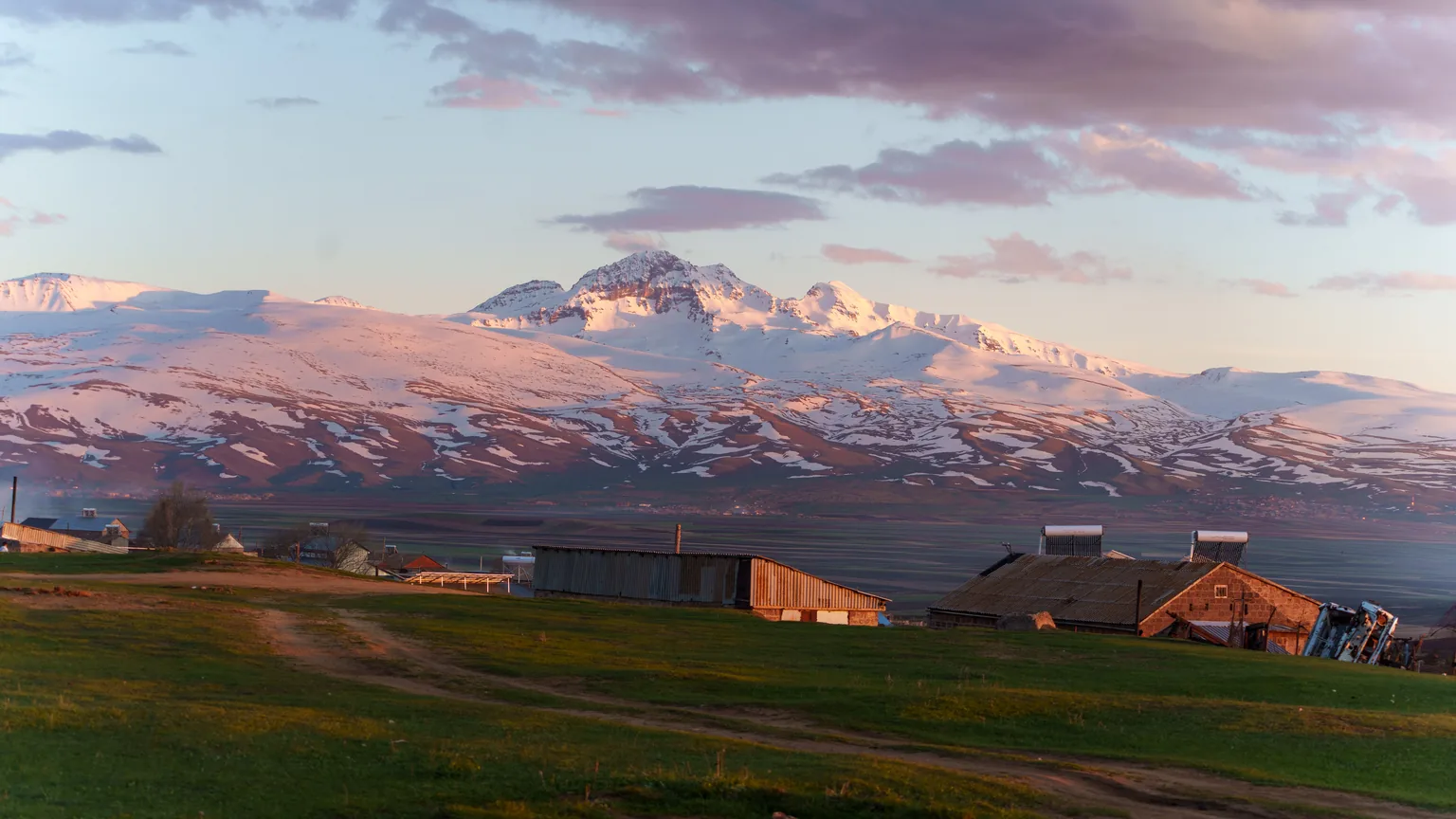
The best place to live in Armenia depends on your habits and priorities. Some people want mild winters, some struggle with summer heat, and for others air quality comes first. The cities are too different to reduce the comparison to a single ranking.
In this article, we compare eight cities by climate and air quality. We look at where winters are warmer and summers cooler, how much precipitation each city receives, and how PM2.5 changes with the seasons. This should help you compare the options and choose the city that suits you best.
Climate: Mild Winters or Cool Summers
| City | Population, thousands | Elevation, m | Days of the year by temperature | Precipitation, mm/year |
|---|---|---|---|---|
| Yerevan | 1,141 | ≈1000 | 41 105 112 103 | 490 |
| Winter: −3.5…5.8°CSummer: 17.7…32.3°C | ||||
| Gyumri | 115 | ≈1500 | 80 112 120 46 | 550 |
| Winter: −8.3…1.6°CSummer: 12.8…26.1°C | ||||
| Vanadzor | 78 | ≈1350 | 56 126 157 26 | 770 |
| Winter: −4.2…4.0°CSummer: 13.1…23.9°C | ||||
| Hrazdan | 50 | ≈1675 | 89 122 140 | 770 |
| Winter: −7.3…0.5°CSummer: 11.4…22.6°C | ||||
| Sevan | 20 | ≈1900 | 86 133 137 | 740 |
| Winter: −6.2…0.5°CSummer: 11.6…20.7°C | ||||
| Ijevan | 20 | ≈730 | 24 128 151 62 | 790 |
| Winter: −0.6…6.9°CSummer: 15.8…25.6°C | ||||
| Dilijan | 16 | ≈1250 | 46 130 155 34 | 760 |
| Winter: −3.6…4.9°CSummer: 13.5…24.3°C | ||||
| Tsaghkadzor | 1 | ≈1840 | 88 126 136 | 660 |
| Winter: −7.1…0.2°CSummer: 11.4…22.3°C |
below −10°C−10…0°C0–10°C10–20°C20–30°C30°C+
Temperature. Yerevan is the hottest city in the sample: average daily summer temperatures range from 17.7 to 32.3°C, and it is the only city with very hot days. Its winter is comparatively mild. Gyumri is much colder: −8.3 to 1.6°C in winter and 12.8 to 26.1°C in summer, with almost 200 days a year when the daily mean stays below 10°C. Among the other cities, Ijevan has the mildest winter and Sevan the coolest summer. Tsaghkadzor and Hrazdan are close to Sevan, while Vanadzor and Dilijan fall in between.
Wind. Sevan has the highest average wind speed at about 2.5 m/s, followed by Hrazdan at 2.4 m/s and Gyumri and Tsaghkadzor at 2.2 m/s. The average is about 2 m/s in Yerevan, 1.8 m/s in Vanadzor, 1.6 m/s in Dilijan, and 1.5 m/s in Ijevan. Winds strengthen in summer in Yerevan and Gyumri, and in winter in Sevan. Winter calm is especially important for air quality: when wind does not disperse emissions, pollution accumulates over the city. These are averages; terrain and buildings can make wind feel very different in a particular neighborhood.
Precipitation. Ijevan, Vanadzor, and Hrazdan are the wettest cities, with roughly 790–770 mm a year. Dilijan and Sevan receive about 760–740 mm, Tsaghkadzor around 660 mm, and Gyumri 550 mm. Yerevan is markedly drier than the rest at about 490 mm a year. In almost every city, precipitation peaks in spring and early summer, while August is usually the driest month.
Conclusion. There is no universally best climate here. Yerevan suits those who value a mild winter and do not mind a hot, dry summer; Gyumri suits those willing to accept a cold winter for a more moderate summer. Sevan, Tsaghkadzor, and Hrazdan are cooler but also colder and windier, while Ijevan, Dilijan, and Vanadzor have milder conditions or calmer winds but are noticeably wetter.
Air Pollution
Pollution accumulates especially strongly in Yerevan and Gyumri in winter. Heating adds to the cities’ year-round emissions, while weak winds and temperature inversions keep polluted air close to the ground. In summer there is no heating, winds strengthen, and the air mixes more effectively, so the differences between cities become much smaller.
Ijevan has weak winds for most of the year, so winter heating emissions are more likely to linger over the city. Vanadzor still shows a winter rise despite stronger winds, which means ventilation alone cannot explain it: the volume of emissions, inversions, and the valley terrain also matter. Dilijan and Tsaghkadzor look similarly better than the other cities, although individual episodes show that neither is protected from stove smoke, fires, or smoke and dust arriving from nearby areas. There is not enough data for Sevan and Hrazdan to describe seasonal pollution patterns.
Why Air Quality Worsens in the Evening
All the cities shown follow the same daily pattern: pollution falls in the morning and during the day, then rises again toward evening. This is especially clear in winter.
Dilijan and Tsaghkadzor stand out from the other cities: pollution remains lower throughout the day, and the evening rise is much weaker. These two cities have the best-looking winter PM2.5 pattern in the comparison.
Why does this happen? We believe the main reason is that many households turn on their heating in the second half of the day. The denser the city, the more gas boilers and stoves operate at the same time within a small area. Where convenient or affordable heating is unavailable, people burn wood and whatever else is at hand, including household waste. Evening traffic adds to the emissions.
The geography of many Armenian cities amplifies the effect. Basins and narrow valleys, surrounding mountains, weak winds, and temperature inversions keep emissions near the ground. Pollution produced in the evening does not disperse; it accumulates over the city. We examined the same pattern in detail in our study of winter air pollution in Yerevan. The contribution of heating, traffic, and other sources cannot be separated precisely without chemical analysis of the particles, but the shape of the daily curve is most consistent with heating.
My Experience of Living in Yerevan
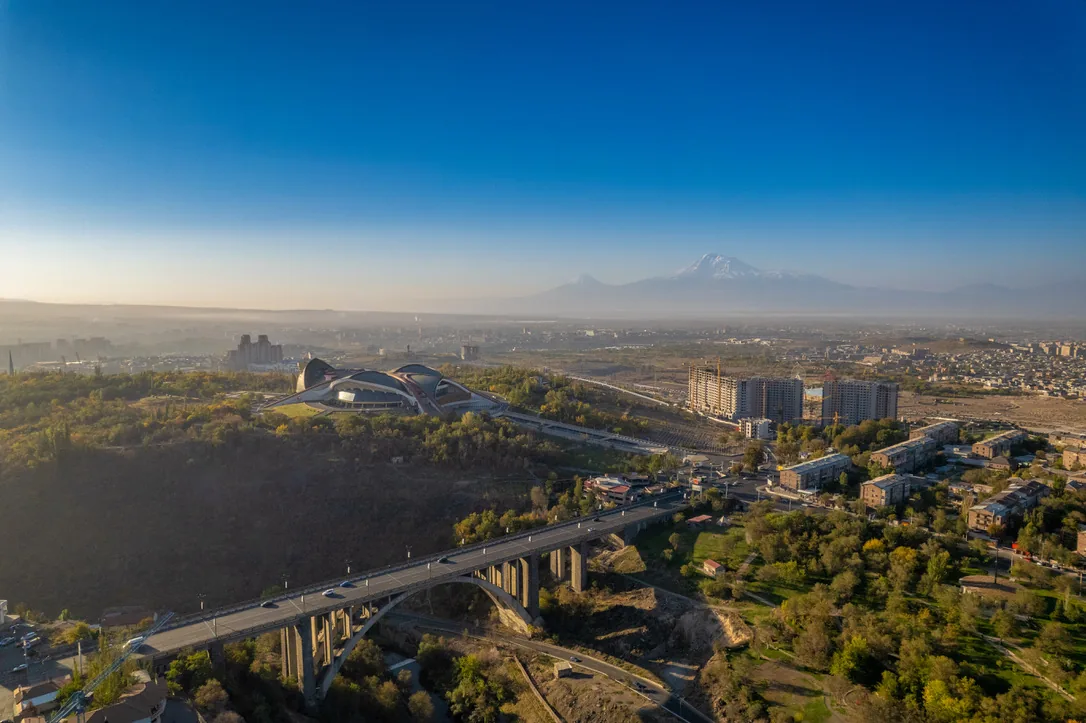
Yerevan has a vibrant cultural life, and for me that is one of the city’s greatest advantages. But there is an unpleasant downside: the city is noisy, dusty, and choked with vehicle exhaust. Dust is especially heavy in the southern districts—southern Kentron, Erebuni, and Shengavit.
The Nubarashen landfill is a separate problem. Sometimes it burns with open flames; at other times it simply smolders and continues to pollute the air. We have written separately about pollution after a major landfill fire and examined the planned new waste-processing complex in Nubarashen.
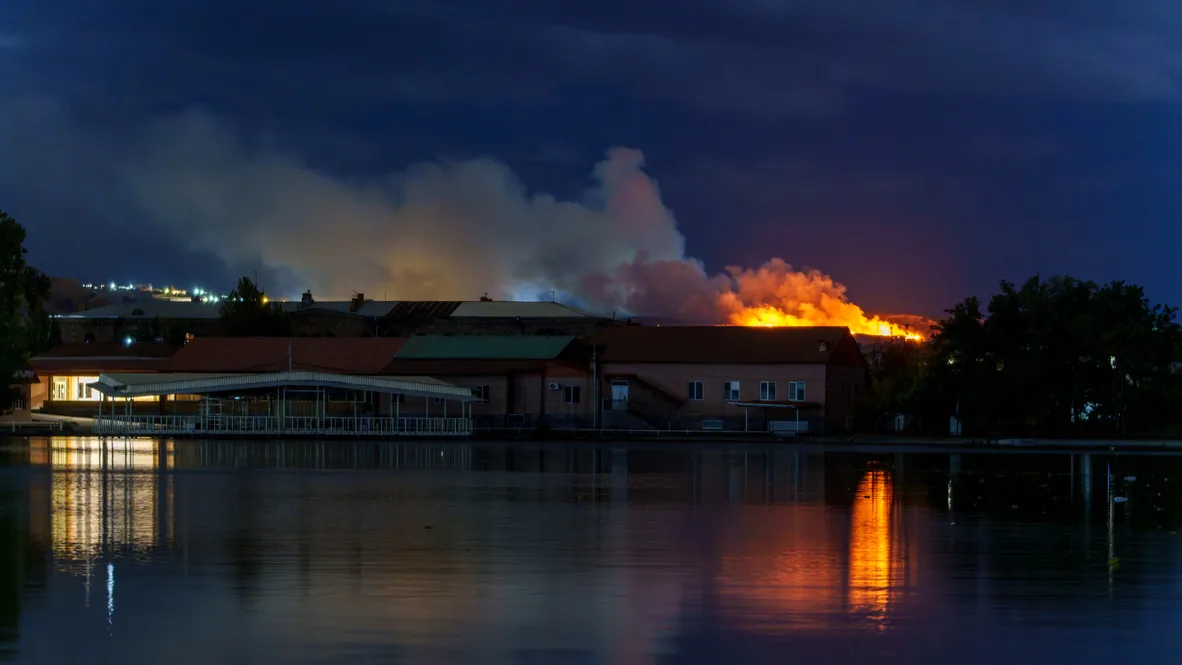
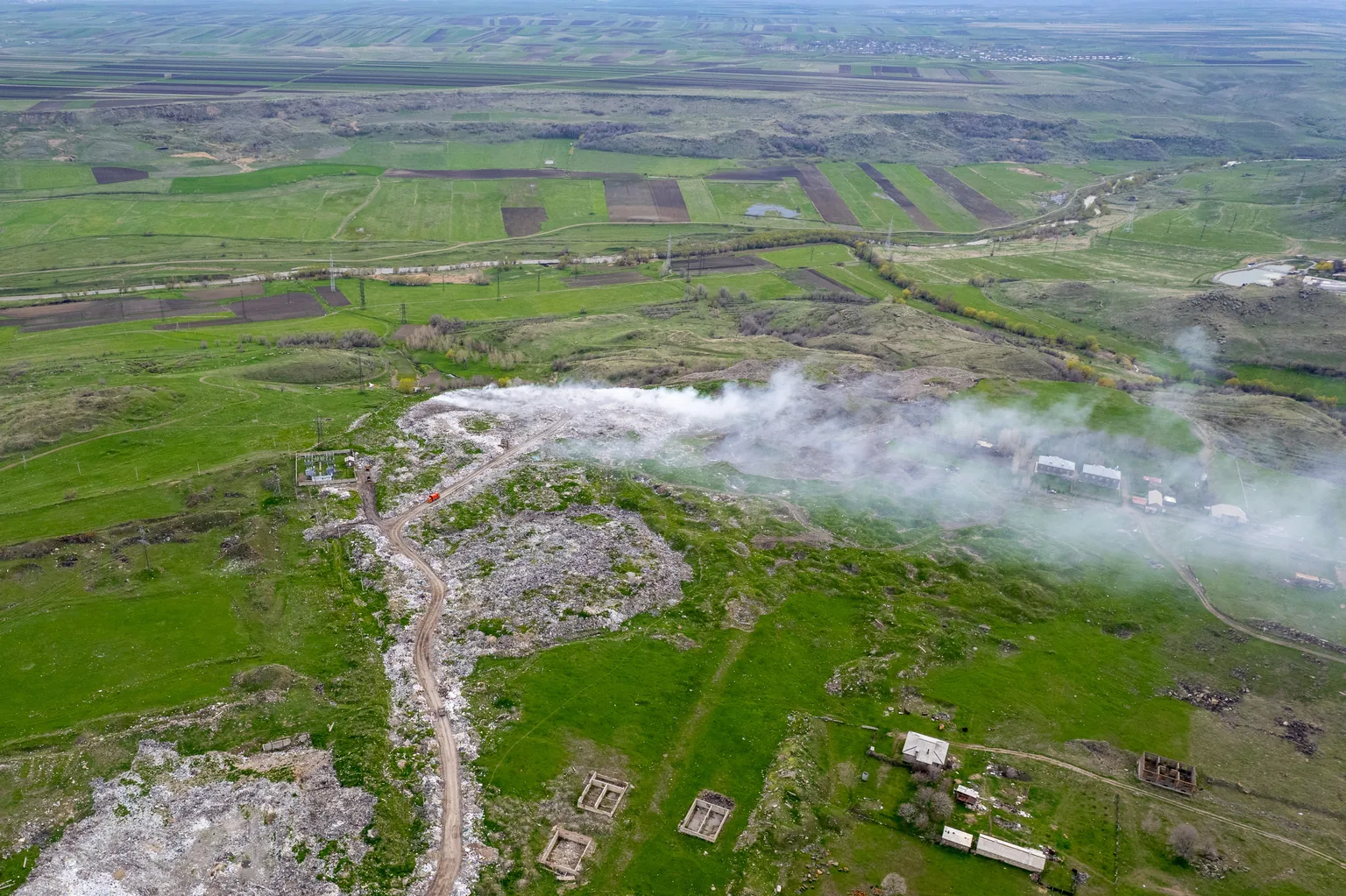
While traveling around Armenia, I noticed one important thing: before choosing a city, check where its landfill is and which side of it the residential neighborhoods are on. I would assume that sooner or later the landfill will burn. During my trips, landfills were burning in both Gyumri and Vanadzor, and local residents described similar fires near Hrazdan.
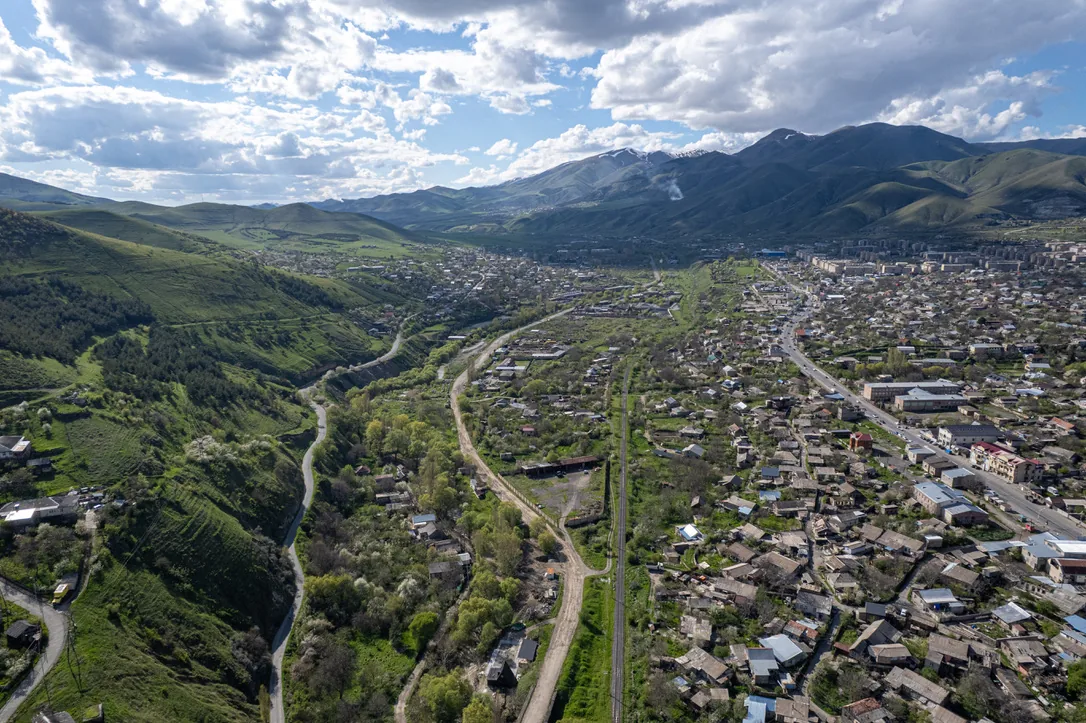
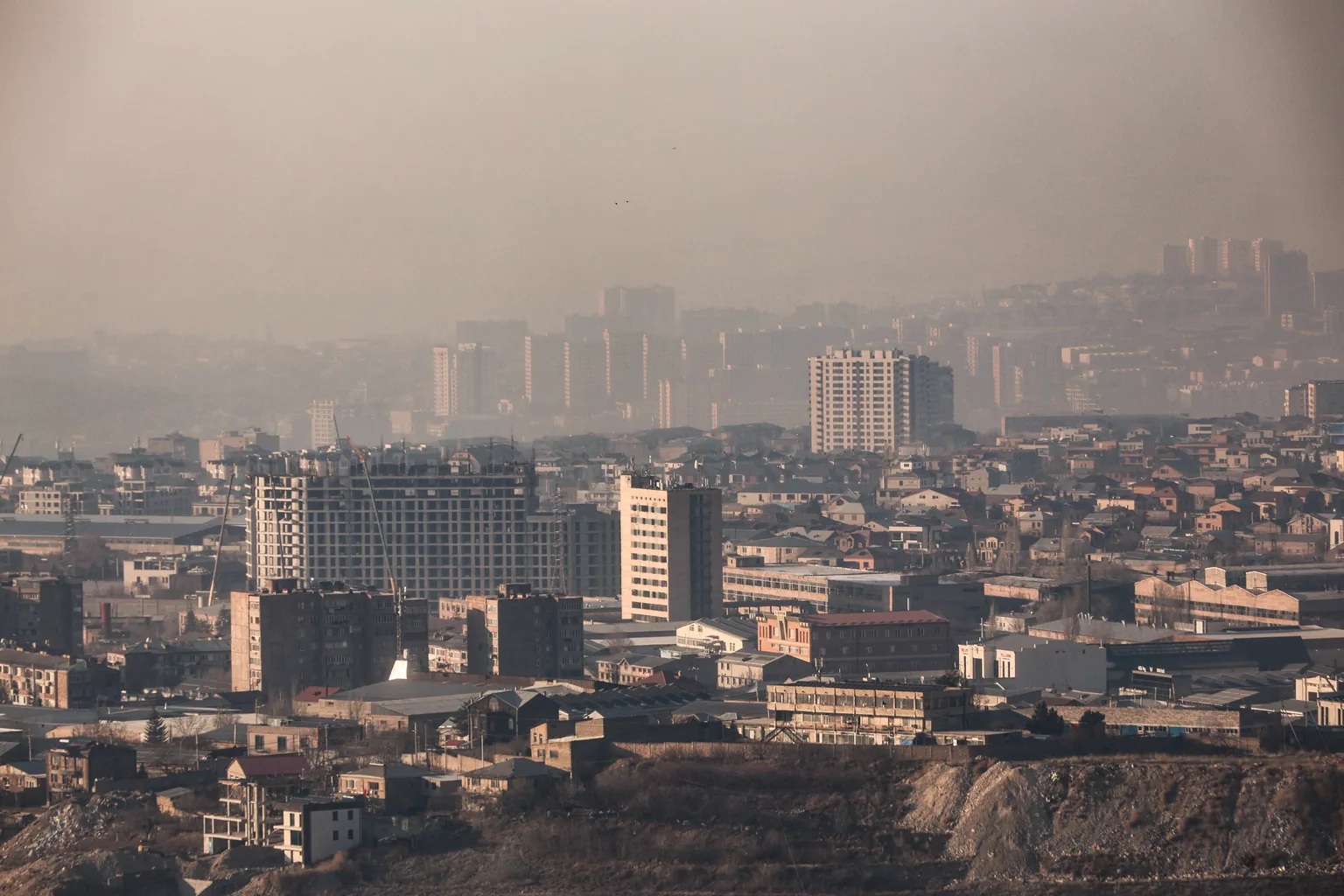
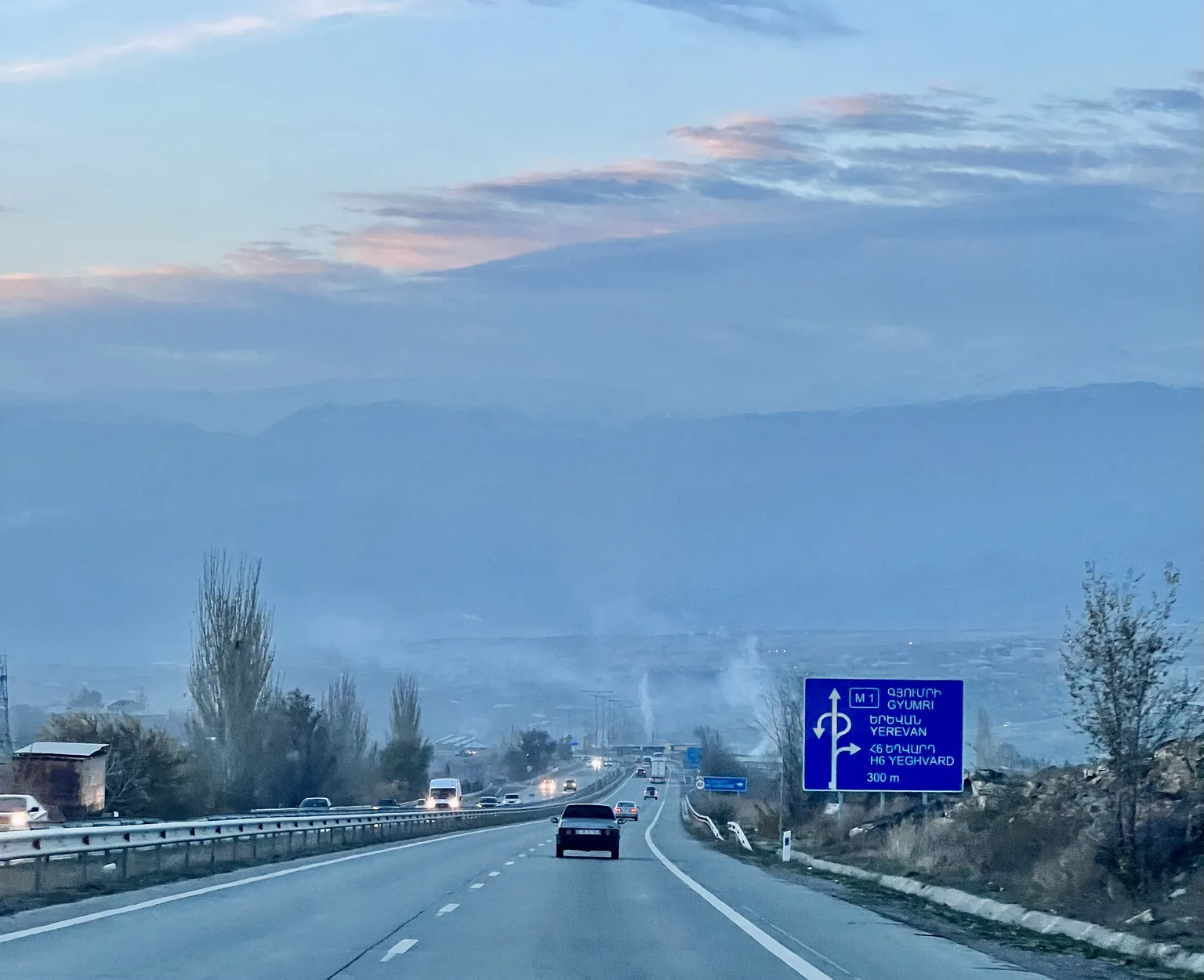
In summer, evening winds provide some relief from Yerevan’s heat. In winter, by contrast, the air often becomes completely still, and heavy smog appears as soon as the heating season begins. At times it is so thick that even the dog’s fur smells of burning after a walk. In my experience, the road toward Gyumri is no better: people burn wood in many settlements, and the smell of smoke hangs in the air.
Living outside Yerevan does not necessarily mean social isolation. Gyumri has a mutual-aid chat, and Vanadzor has a city chat. Dilijan has the Dilijan Care community for local initiatives, meetups, and mutual aid; the general chat is linked in the channel description. These communities are useful for asking residents about neighborhoods, heating, air quality, and everyday life before moving.
Moving to Tsaghkadzor or Dilijan would offer cleaner air. But I do not want to give up city life, so compromise is unavoidable. We have a separate guide on choosing a respirator for outdoors and an air purifier for the home.
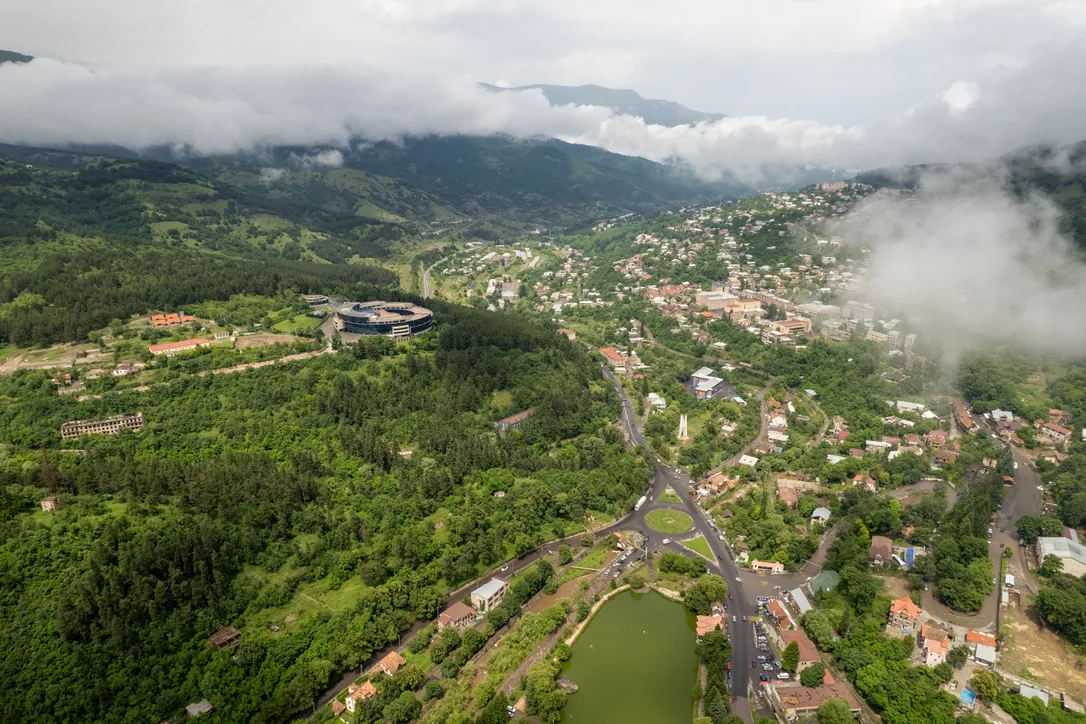
Which City Might Suit You
- If you want a mild winter: Ijevan, provided that life in a provincial city and the distance from the capital suit you. The drive to Yerevan takes about 2 hours 25 minutes. Ijevan is poorly studied, however: its air-quality data comes from just one sensor, compared with more than a hundred in Yerevan. Yerevan comes next, but it is much hotter in summer and has substantially worse air pollution in winter.
- If a cool summer matters more: Hrazdan looks like the most practical choice for year-round living because it is larger and more developed. Tsaghkadzor suits those who want a resort atmosphere and cleaner air. Sevan has an even cooler summer, but its winter is longer, and air-quality data for both Sevan and Hrazdan remains insufficient.
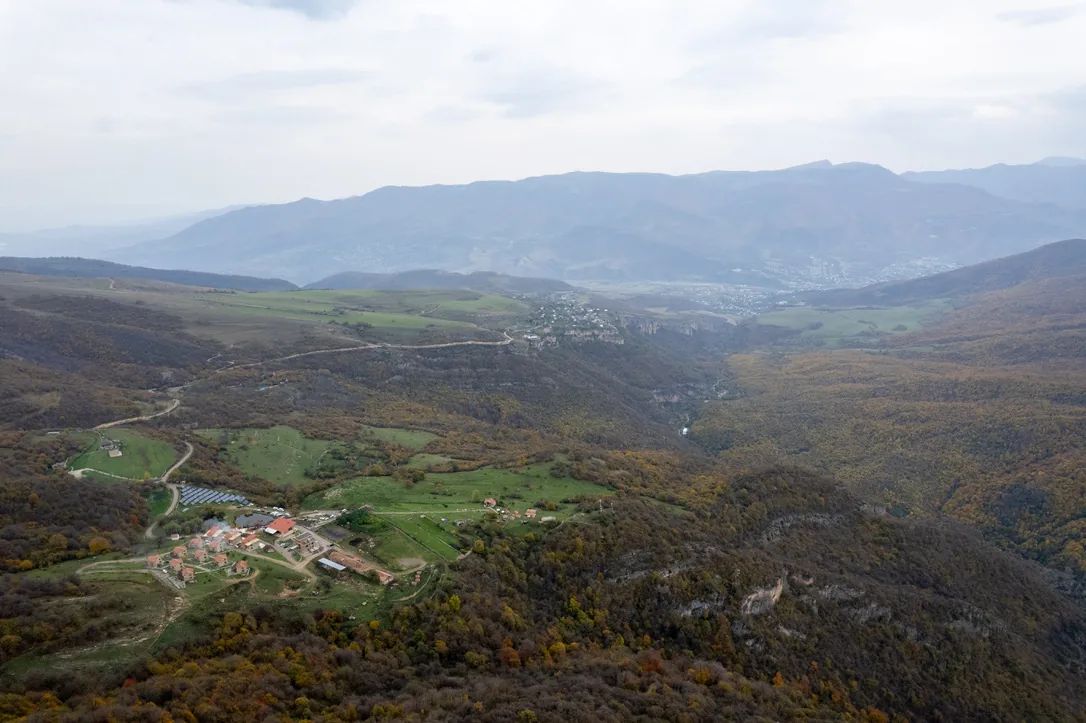
- If air quality comes first: Dilijan and Tsaghkadzor. Their observed PM2.5 looks similarly better than in the other cities. Dilijan is milder and wetter; Tsaghkadzor is colder and windier.
- If choosing among the three largest cities: Vanadzor looks more moderate than Yerevan and Gyumri in terms of summer temperature and winter pollution, but it is noticeably wetter.
- If you want the best overall balance: Dilijan combines a moderate summer, a winter that is not the harshest, and one of the best PM2.5 results.
Limitations
This comparison shows the broad picture, but it cannot predict weather or air quality in a particular neighborhood or home. We assessed climate using the past several years, so an unusually hot, cold, or rainy year may have affected the result. PM2.5 data for Sevan and Hrazdan is still limited, and we did not include other pollutants such as coarse dust or vehicle exhaust gases. Treat the article as a starting point for choosing a city, not as a definitive ranking.
How We Calculated the Figures
We compared weather using hourly data from Apple’s Weather service from January 1, 2023 through August 19, 2026. AirQuality.am processed the Apple data: for Yerevan, we averaged 11 district-level points; for each other city, we used one point. These figures describe the weather of recent years, not a long-term climate normal.
We used two years of PM2.5 data from AirQuality.am, from August 20, 2024 through August 19, 2026. The service collects readings from the Yerevan municipal network, Clarity, ArmAQI, ClimateNet, AirGradient, PurpleAir, and IQAir. These networks configure their sensors differently, so we bring their readings onto a common scale before comparing them. The methodology is described in more detail here.
Population figures come from Armstat data as of January 1, 2025, rounded to the nearest thousand. This is a current estimate based on the 2022 census.
The colored bar shows how many days per year have a mean temperature in each range. Winter and summer values are the average daily minimum and maximum for December–February and June–August.
Do you live in one of these cities? Share your experience in the comments—tell us what the climate and air feel like in your neighborhood in winter and summer.