
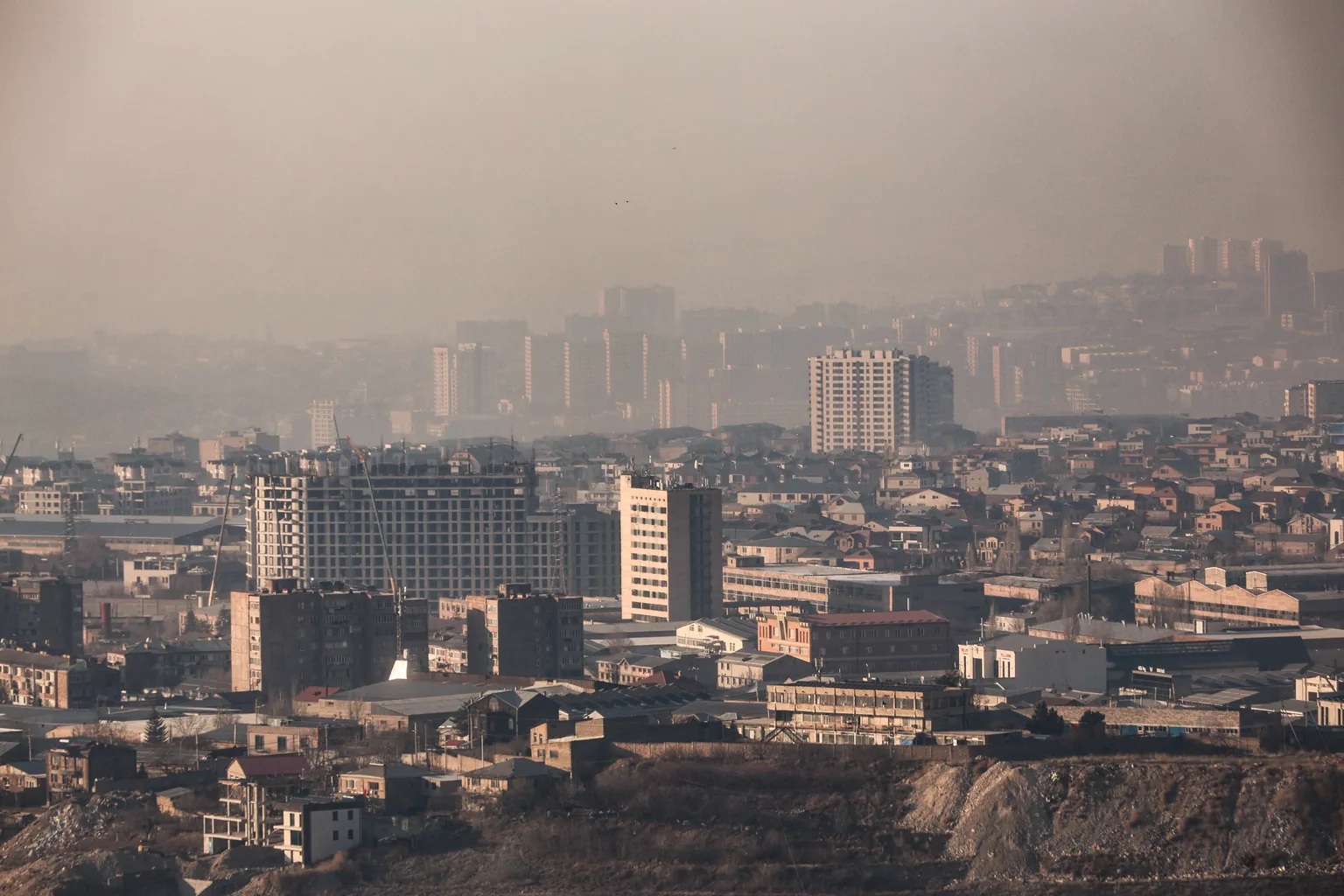
When smoke rises from nearby garages or private homes, it can seem that reporting it and getting an inspection will solve the air pollution problem. If leaves or waste are being burned there, a complaint really can help: Article 11 of the Law on Atmospheric Air Protection prohibits this, including in boiler rooms and stoves. Stopping this burning will reduce smoke, odour and pollution near your home, but it will not solve the citywide problem.
Ordinary heating is more complicated: Armenia has no general ban on heating with wood or coal stoves. Even if an inspection finds no violation, the stove will continue to pollute the air. Replacing it involves costs that not every owner can afford. That is why residents should demand a programme to switch to cleaner heating, with funding, deadlines and clear responsibility for the results.
What we know about heating
According to Armstat's 2024 living conditions survey, around 3% of households in Yerevan use firewood for heating. Across Armenia, the figure is around 17%, and in rural settlements it exceeds 40%. These figures come from Table 5.9 in the volume published in 2025.
A hypothetical calculation shows why even a few percent can matter. Imagine 100 homes: three with conventional wood stoves and 97 with gas boilers. Assume that the homes have comparable insulation. Suppose they have the same floor area and are heated to the same indoor temperature. To keep the calculation simple, assume that the stoves and boilers have the same efficiency. The EMEP/EEA air pollutant emission inventory guidebook gives emission factors of 740 and 0.2 g of PM2.5 per GJ of fuel energy for these categories, in Tables 3-40 and 3-16. We also used them in our January article.
In this example, 3% of the homes emit around 114 times as many primary particles as the other 97%, accounting for about 99.1% of the combined direct PM2.5 emissions from these two groups. Primary particles are those emitted directly when fuel is burned. This is an approximate calculation, but it shows how even a small share of homes with polluting heating can contribute significantly to air pollution.
Our report on the winter of 2025–2026 shows an evening rise in pollution, which may indicate that heating makes a substantial contribution to winter air pollution. Further research is needed to quantify this contribution and separate it from the effects of traffic and weather. This research should be part of the city's programme, alongside help for residents to replace the most polluting equipment.
Switching must be affordable
Telling a homeowner to “just install a different boiler” leaves them with several costs at once: buying the equipment, installation, a possible connection fee and heating bills throughout the following winter. If they cannot afford these costs, simply requiring them to change their heating is not enough.
In the same Armstat survey, only 61.9% of households in Yerevan reported adequate heating in cold weather, as shown in Table 5.11. This figure does not explain why homes lack sufficient warmth, but it needs to be considered when designing the programme: replacing equipment should help people heat their homes adequately.
The World Bank's climate report on Armenia also treats the transition away from wood heating as a task requiring financial and practical support. Decisions about support should take into account the availability of fuel and equipment, housing conditions and users' habits. Attributing every choice to burn wood solely to poverty would be an oversimplification.
A heat pump may be suitable for some homes, while electric or cleaner gas heating may work for others. The choice depends on the building, infrastructure and running costs. Insulating walls, roofs and windows reduces heating needs and should be considered alongside equipment replacement. Support should allow a family to heat its home adequately after the switch.
What to demand from the authorities
Other necessary measures in transport, construction, industry and waste management are set out on our page “How to reduce air pollution in the city”. A heating programme should form part of this broader effort.
An inventory of sources. How many homes, garages and workshops use stoves, what do they burn, and where do their emissions affect the most residents? Surveys and neighbourhood-level emissions estimates are needed. Statistics on home heating cannot replace surveys of small businesses and garages.
Funding for the transition. How many families will receive support, what share of their costs will it cover, who will be eligible, and how much will heating cost after the replacement? Low-income families need subsidies and help with running costs. A loan alone does not make the switch affordable for everyone.
Clear requirements and deadlines. Which fuels and types of equipment do the city and national government intend to phase out? What alternatives will owners have by that deadline? People must have a realistic way to meet the requirements. Existing bans on burning waste, meanwhile, need to be enforced now.
Public reporting of results. How many systems were replaced during the season, how much money was spent, how far did emissions fall, and what changed in residential neighbourhoods? Weather must be taken into account when assessing air quality: a few windy days do not, on their own, prove that a programme has succeeded.
If these measures are already part of national or city programmes, residents need to know their specific terms and results. A programme's name alone is not enough to tell people when heating in their neighbourhood will stop producing smoke.
An example of a ban backed by support
In Kraków, the transition away from coal and wood stoves included assessing the contribution of different sources, taking an inventory of equipment and providing financial support to residents. According to the European Commission's account of the programme, a ban on using solid fuels has been in force since 1 September 2019, and more than 45,000 solid-fuel stoves had been replaced with other heating sources by the end of 2020. Residents also received help choosing equipment and applying for support.
The sequence of actions is useful for Yerevan: establish the scale of the task, make the transition possible and set the requirements. Specific technologies, deadlines and the level of support should be chosen to suit local conditions.
Complaints about waste burning, unsafe stoves and emissions from workshops remain necessary. But responsibility for winter air quality should extend beyond responding to individual complaints. Residents should also demand an answer to this question: what programme will enable a move away from polluting heating, who will pay for the transition, and what results will the city achieve during the coming heating season?
Closer to the start of the heating season, we will add up-to-date contact details to this article for services where residents can promptly report the burning of leaves and waste.