

AirGradient conducted a large-scale analysis: 41 sensors, 14 locations across 6 continents, totaling about 15,000 days of parallel measurements next to reference instruments. Results were published as a scientific webinar. The sensors we recommend to our community and which are installed at several locations in Yerevan are precisely AirGradient based on the Plantower PMS5003 sensor. The same sensor is used in Purple Air sensors and—most importantly for us—in Yerevan City Hall's municipal network (Clarity Node-S stations). Therefore, the webinar data is directly practically significant for us.
Raw Data Overestimate by 60%—and This Is Normal
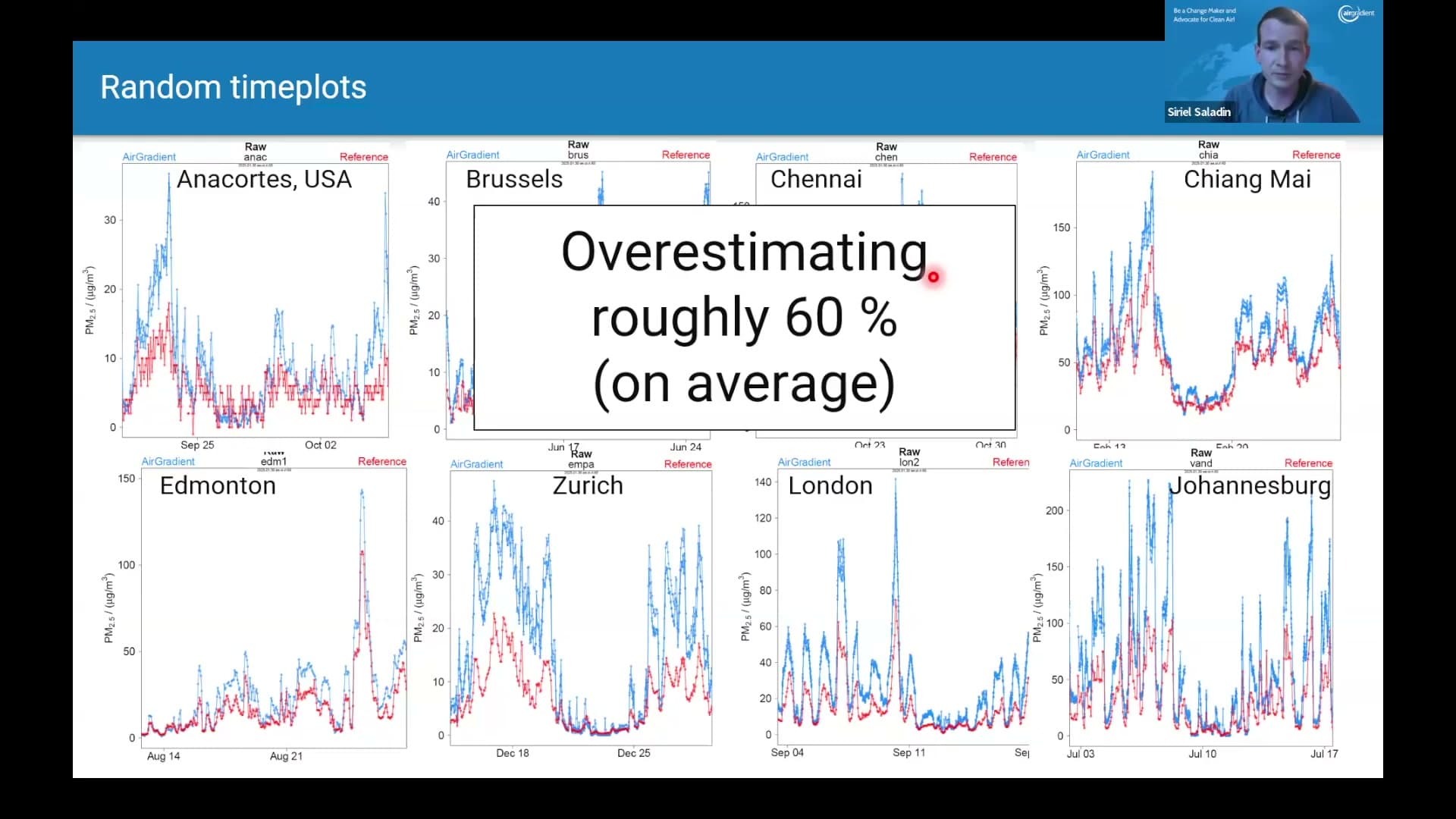
The main finding: unprocessed AirGradient data systematically overestimate PM2.5 by approximately 60% relative to the reference. This is seen in all locations: London, Brussels, Chennai, Chiang Mai, Johannesburg, Edmonton—the picture is the same everywhere. Two sensors standing side by side give almost identical readings (coefficient of variation 3.9–6.8%)—meaning reproducibility is excellent, but calibration is needed.
This is known PMS5003 behavior: the sensor counts laser beam scattering, not particle mass directly. It assumes a certain particle density and size—which in real urban air doesn't always match reality. On our website, all necessary corrections have already been applied—data is displayed in corrected form.
EPA Correction Works—in 13 of 14 Locations
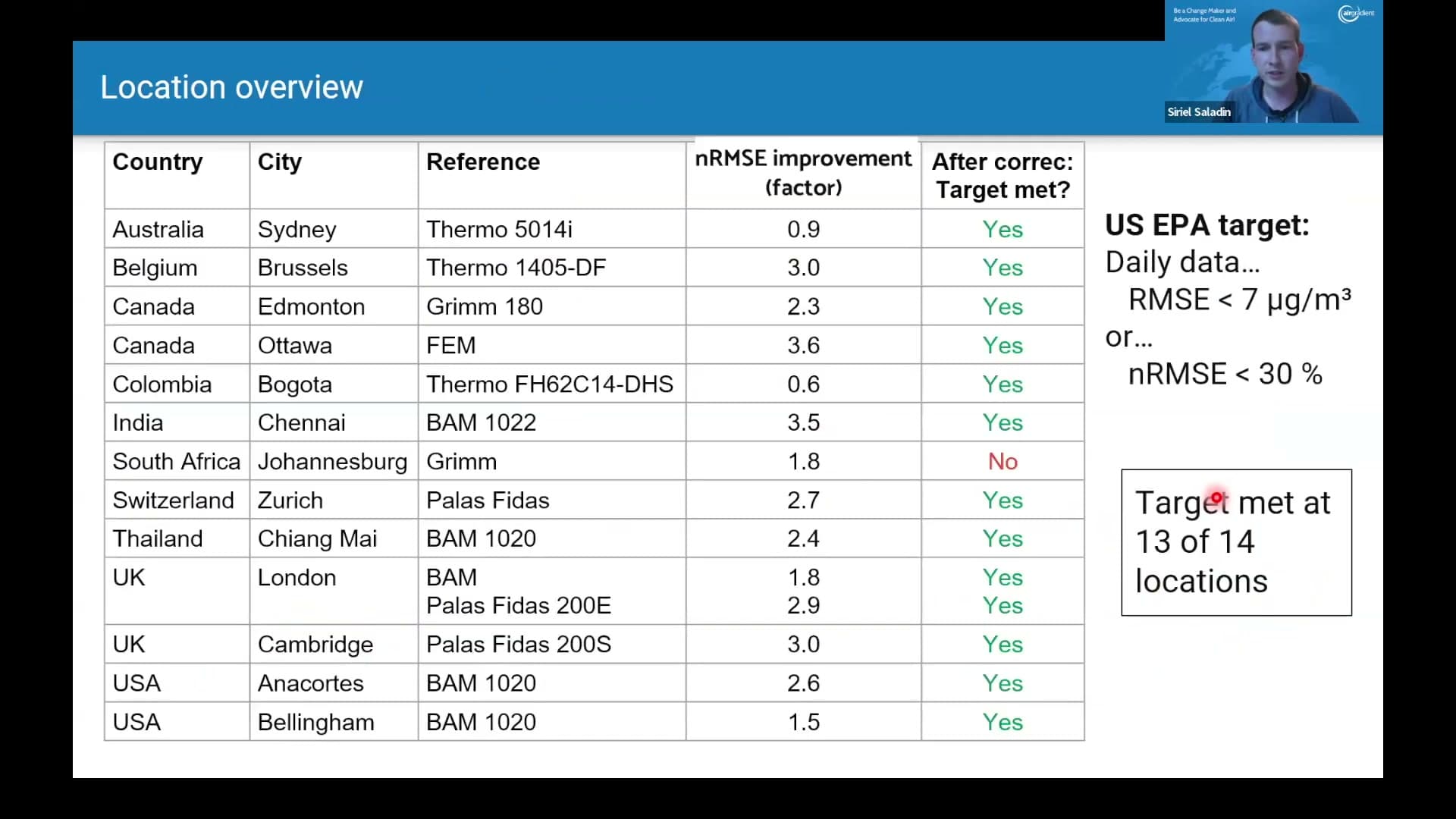
The US EPA developed a correction algorithm specifically for PMS5003. After applying this correction, 13 of 14 locations fall within EPA target indicators (NRMSE < 30%, R² > 0.7).
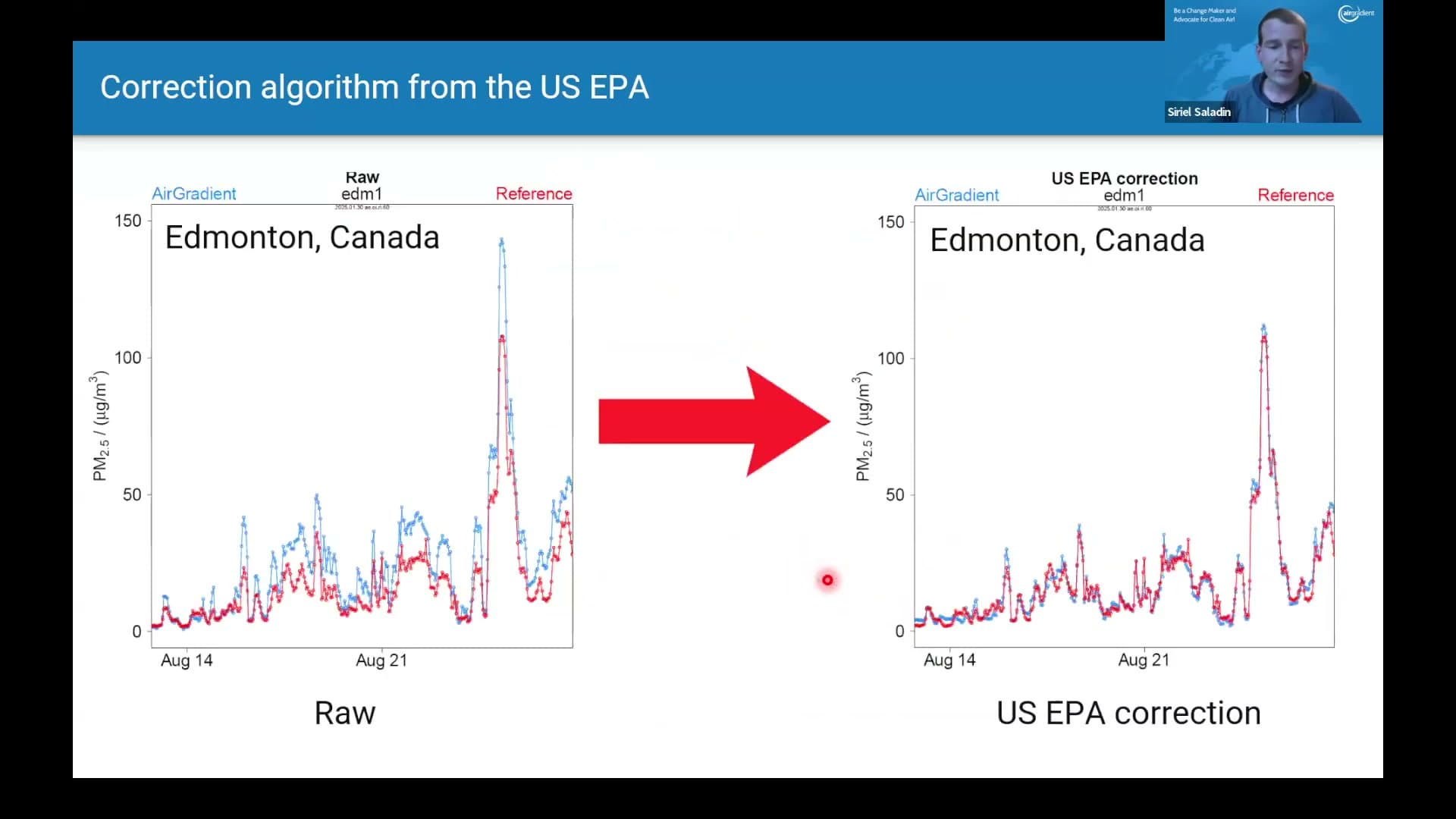
This is precisely the correction AirGradient applies on its platform—so data from sensors connected to the official server is already corrected.
Main Surprise: The Reference Also Errs
Two anomalies—Bogotá (Colombia) and Sydney (Australia)—turned out to be locations where raw AirGradient data already matches the reference without correction. Paradox: applying the EPA correction there makes the result worse.
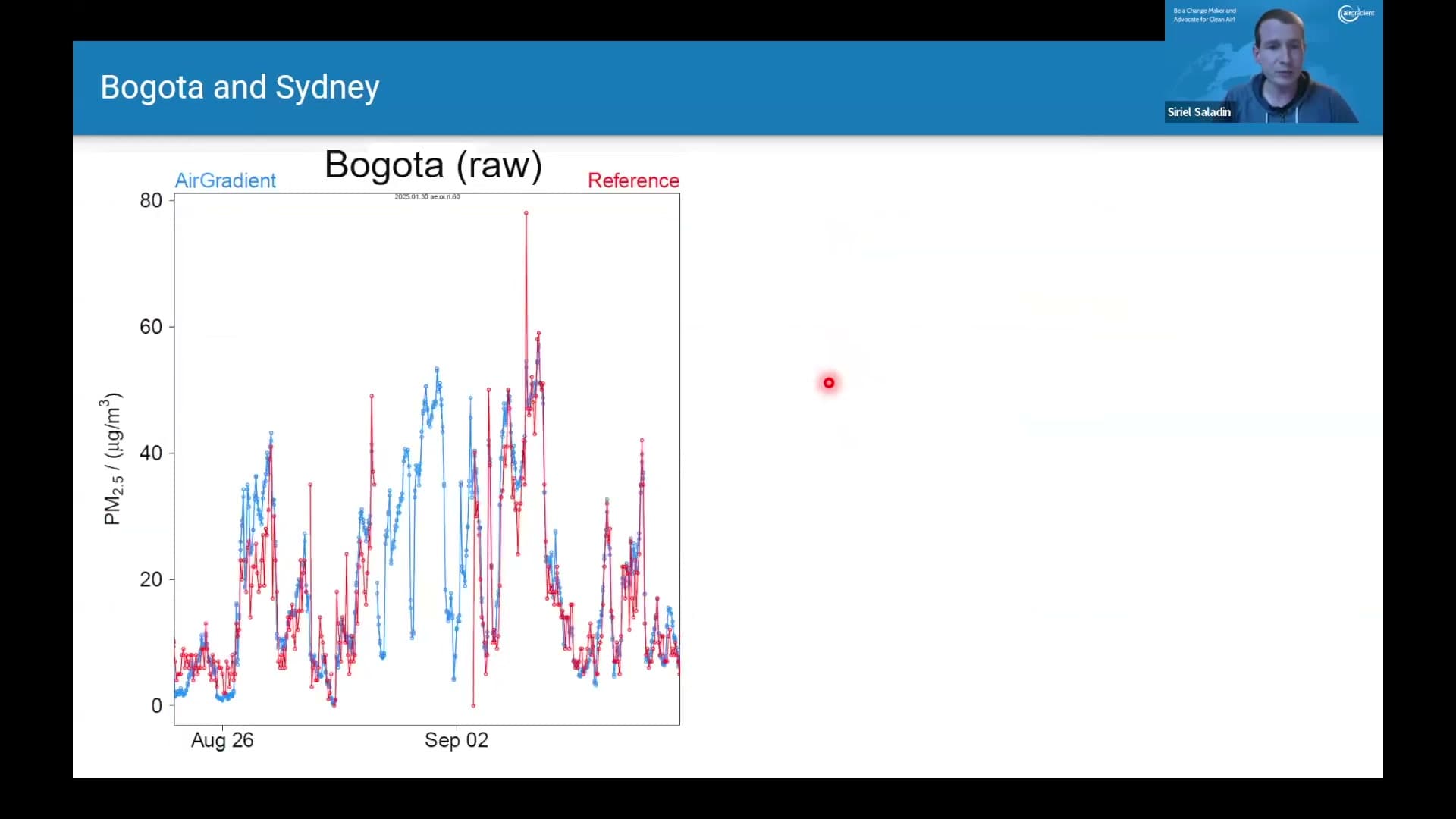
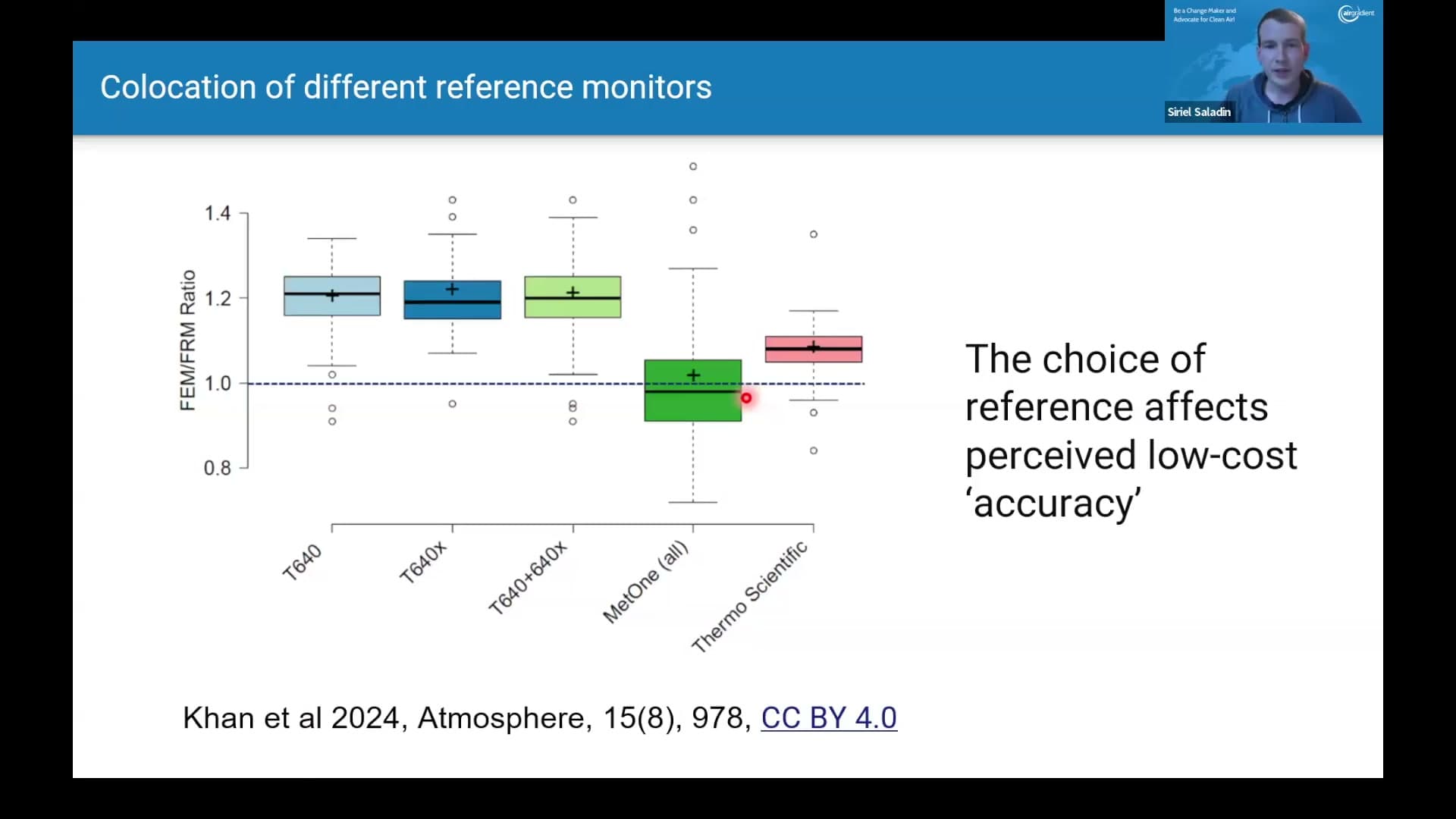
Investigation showed: in both cities, Thermo beta-attenuation monitors are used as the reference. In another 2024 study, it was found that one such monitor in laboratory conditions overestimates readings by 60%—exactly as much as PMS5003 "overestimates" relative to it in field conditions. The authors cautiously state: "this may be a coincidence, or may not be."
Conclusion: what we consider a "cheap sensor error" may partly be an error of the reference itself. Different reference instruments (Teledyne T640 overestimates by an average of 20%, sometimes up to 50%; MET One Beta agrees well) don't give identical results among themselves—and this is a recognized problem in particle measurement metrology.
Humidity: Effect Exists, but Small
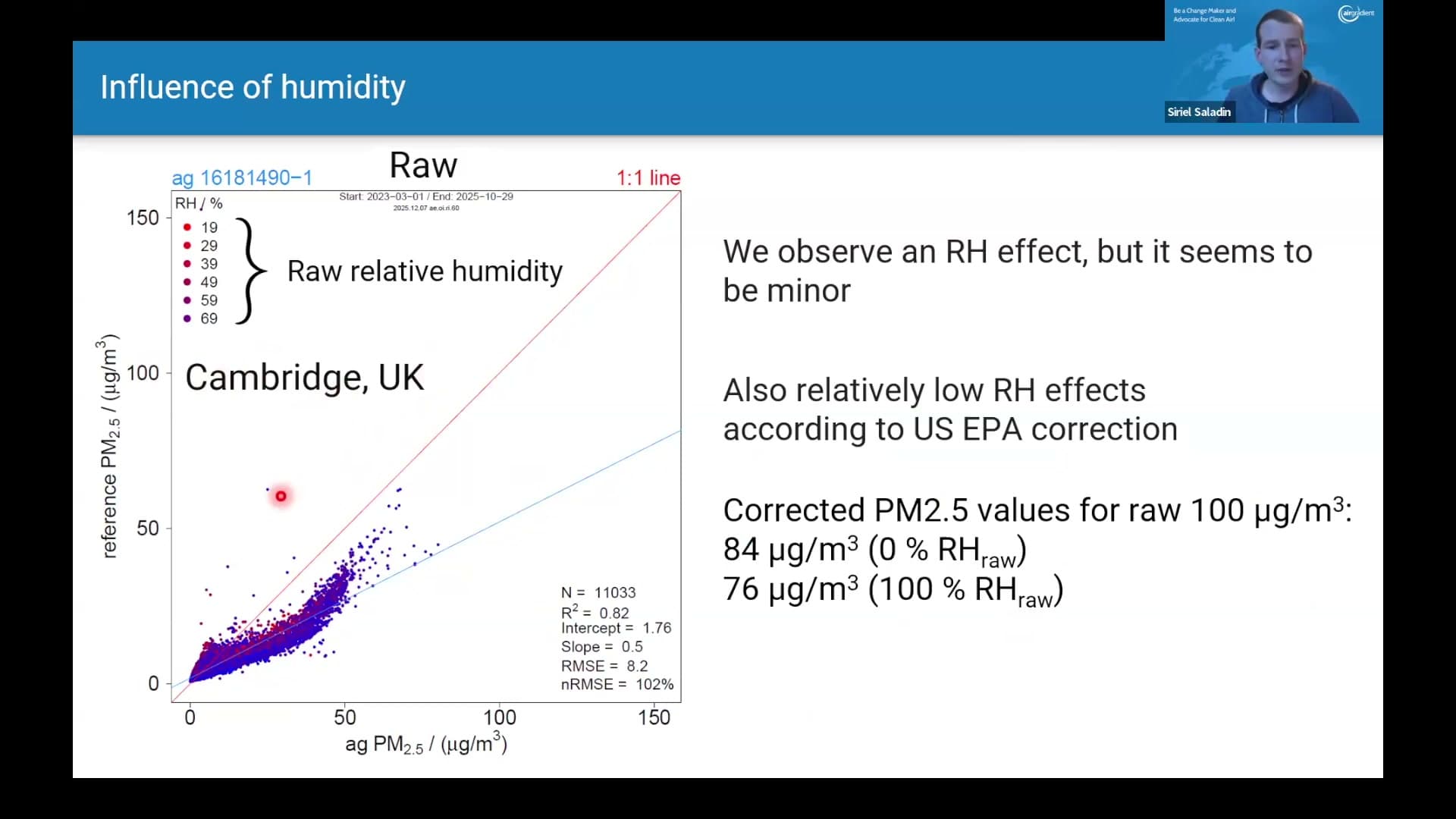
Humidity affects readings—this is confirmed. But in AirGradient data, the effect turned out to be modest: the difference between readings at 0% and 100% relative humidity for the same raw value is only a few micrograms. One reason is the PMS sensor module inside the housing heats the air and reduces humidity inside by about 10 percentage points compared to outdoor. This is an unplanned but useful effect.
Temporal Resolution Matters More Than It Seems
Correlation (R²) between sensor and reference strongly depends on the time step. In Anacortes (Washington), hourly correlation was 0.58—it seems the sensor works poorly. But daily correlation is already 0.85. Reason: beta-attenuation monitors are very noisy at low concentrations, and averaging removes this. This is an important methodological point when evaluating any data: the metric "bad sensor" may actually mean "noisy reference."
Long-term Drift: Two Years in London Without Degradation
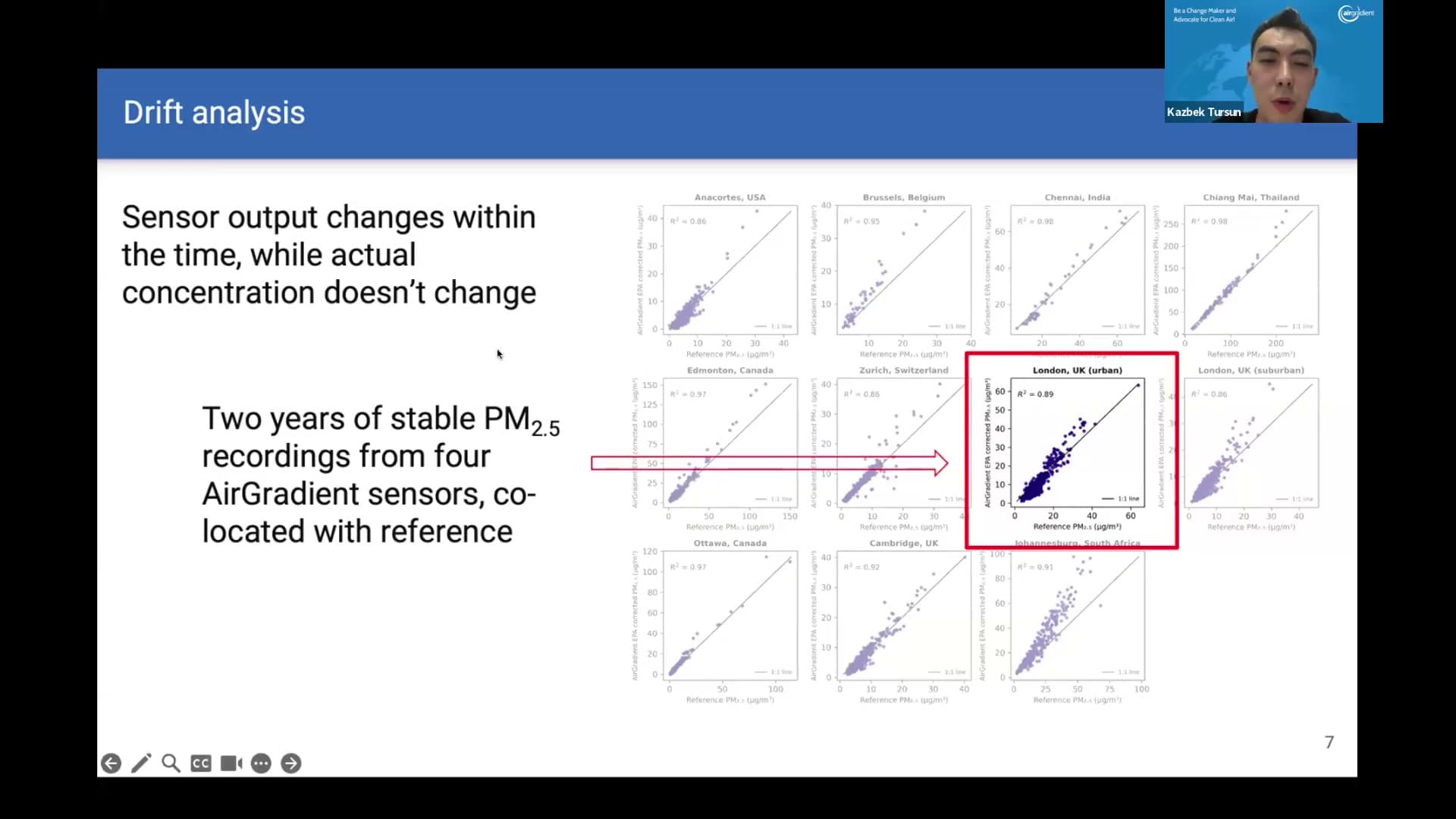
Four sensors in London worked for two years next to the reference—no systematic drift was detected. Neither in the slope of the calibration curve nor in absolute values was there increasing overestimation or underestimation. This is an important result: cheap optical sensors proved to be stable instruments with proper initial calibration.
What This Means for Our Data in Yerevan
Sensors on the AirGradient platform (connected to their server) already receive EPA correction and show corrected values. Sensors integrated directly into our site also use data via the AirGradient API. The webinar results give grounds to trust this data: on average, at the level of daily values, the discrepancy with the reference is no greater than the discrepancy between reference instruments themselves.
The only significant caveat is aerosol composition. Researchers consider it the main factor affecting optical sensor accuracy: particle size and density change how the sensor "sees" mass. Yerevan's winter aerosol (secondary ammonium nitrate, ash from wood stoves, vehicle exhaust under inversion) has its own specifics—and ideally we need our own local colocation next to a reference instrument to verify this.
Currently, we have no information about any reference instrument in Yerevan whose data would be publicly available. We expect such stations to appear in the city within the next year—this will allow real colocation and understanding of how well the applied corrections work for our specific air.
Original AirGradient webinar: Low-Cost PM2.5 Sensor Performance: Insights from 15,000 Days of Colocation