

The Armenian government has introduced amendments to a number of decisions: starting on November 1, 2027, new standards and methodologies for assessing ambient air quality will take effect. As part of a comprehensive measures program for 2025–2030, the air quality monitoring system is set to be модернизация, including the purchase of 14 stationary stations, 6 of them for Yerevan. In 2025, the Ministry of Environment was allocated 300 million drams to purchase two air quality assessment stations. These two stations have been installed in Yerevan (Kentron administrative district and a park in Kanaker-Zeytun) and are undergoing testing and calibration. They are expected to enable more accurate measurement of key pollutants and provide real-time data.
Air quality in Yerevan in April 2026:

Yerevan Mayor Tigran Avinyan said that current air pollution levels are no longer as high as in November, even though it is now the peak construction season and traffic is heavy. According to him, from November to March air quality largely depends on a climatic phenomenon: an “atmospheric layer” descends, causing pollutants to concentrate closer to the ground. He noted that this situation is typical not only for Yerevan but also for the entire Ararat Valley and neighboring areas. As temperatures rise, the atmospheric layer lifts and observed pollution levels decrease. The municipality, the mayor said, publishes open data and air quality forecasts.
Air quality in Yerevan in March 2026:

The article describes winter air pollution in Yerevan, when smog and temperature inversions trap pollutants near the ground and residents regularly record “unhealthy” readings. AirQuality.am, created by Anton Vlasov, brings together fragmented air-quality data from municipal sensors, volunteer DIY networks, weather stations, and independent monitoring platforms, making it accessible and easy to understand. The platform publishes hourly updates, as well as open raw and processed datasets with documentation. The ArmAQI initiative and other volunteer networks expand sensor coverage across city districts. The project encourages residents to install their own sensors, share data, and engage with authorities on measures to reduce dust and waste burning and to expand green spaces.
Air quality in Yerevan in February 2026:

Yerevan Mayor Tigran Avinyan said the city administration should regularly share air quality data with the public. According to him, the municipality collects the largest volume of such information, including via installed sensors, and this data makes it possible to see seasonal changes (especially from November to March). Avinyan stressed the importance of understanding what portion of air quality deterioration is linked to anthropogenic factors in order to build policy based on accumulated information. He noted that air pollution requires detailed study and that there are many unprofessional assessments surrounding the issue. Expert Kristina Vardanyan said that air quality in Yerevan is worsening and that tree cutting deprives the city of a natural “filter” against pollution.
Air quality in Yerevan in February 2026:

Air pollution in Yerevan has intensified, and one proposed solution is the development of “new-wave gardens”—nature-like green spaces made up of native, drought-tolerant plants. Ecologist and agronomist Zoya Dutova explains that such gardens can become the city’s “lungs,” support biodiversity, and provide more shade while requiring less irrigation and fewer chemicals. She notes that air quality is also tied to greening policy: the city is being built up, former sanitary standards have lost force, and WHO recommendations on green-space provision are not закреплены in law. Mass tree felling and the loss of forests on the slopes (Monument/Victory Park and Nork) have deprived the city of natural barriers, while simply planting trees is not always possible due to soil erosion. Private projects like Goght Urban Valley demonstrate an approach to greening that preserves existing plantings and selects species suited to local conditions. However, without systemic changes in urban planning, even widespread adoption of such gardens will not fully solve the smog problem.
Air quality in Yerevan in February 2026:

Nearly 1,900 Yerevan residents took part in a Telegram channel poll by “YerevanyCh” on how to mitigate air pollution in the capital. The poll was prompted by Mayor Tigran Avinyan’s statement that it is impossible to fully solve the problem due to factors beyond the city authorities’ control. Respondents most often cited mass tree planting and the creation of new parks, followed by strict control of construction dust. In the comments, residents link worsening winter air quality to widespread burning of trash, plastic, tires, and the use of stove heating. Proposed measures include fines and enforcement against waste burning, switching to gas/electric heating, expanding gasification, and greening to combat summer dust.
Air quality in Yerevan in February 2026:

According to a GALLUP survey, about 30% of respondents named air pollution as Yerevan’s most important problem. The findings were presented by Aram Navasardyan, head of the Armenian office of the GALLUP International Association. The survey was conducted by phone on January 19–23 among 601 participants.
Air quality in Yerevan in January 2026:

In 2025, 617 violations were recorded in the field of ambient air protection (up from 397 a year earlier), including 217 in Yerevan. The most frequent violations were related to construction (99 cases in Yerevan), the burning of waste/leaves/stubble, and transporting loose materials without protective covering; the total damage to air was estimated at about 160 million drams. The inspection body conducted control measurements of PM2.5 and PM10 in Yerevan: out of 225 measurements, in 5 cases the exceedance was more than fivefold, and in 25 cases up to fivefold. The agency head noted that “high pollution” data from some platforms may be inaccurate due to large instrument error, and that their checks do not show a critical problem—part of a state strategy of denying the issue. An ambient air protection strategy has been adopted, and Yerevan is creating a system of accurate measurements by installing two stationary stations with support from the Government of Japan. Factors affecting air quality in Yerevan include inversion meteorological conditions, a lack of green spaces, and construction dust; dust-suppression technologies are being introduced and requirements are being закреплены in standards.
Air quality in Yerevan in January 2026:

Armenia has approved a comprehensive atmospheric air protection program for 2025–2030. It предусматривает modernization of air quality monitoring and the introduction of mandatory requirements for the use of dust-suppression equipment in construction and the mining industry. Two automatic monitoring stations have already been installed in Yerevan, and the first data are expected soon. Under a grant agreement with the Japanese government, three more stations are planned to be supplied, and one will be purchased from the state budget, bringing the total in the capital to six. This is intended to ensure comprehensive, citywide air-quality monitoring in line with international standards. Armhydromet of the Ministry of Environment is authorized to officially publish atmospheric air quality indicators and inform the public.
Air quality in Yerevan in January 2026:

Yerevan Mayor Tigran Avinyan said that it is impossible to fully solve the capital’s air pollution problem due to factors beyond the city authorities’ control. According to him, during the cold season, concentrations of dust and pollutants rise sharply because the inversion layer (“atmospheric ceiling”) lowers. Air quality is also significantly affected by emissions coming from neighboring countries, and the mayor estimates that external emissions exceed internal ones. Avinyan noted that restrictive measures can only partially mitigate the deterioration of air quality. Expert Kristina Vardanyan believes that air quality in Yerevan continues to worsen, with children, the elderly, and people with chronic illnesses being the most vulnerable; meanwhile, the protective role of trees is reduced by the cutting of green spaces.
Air quality in Yerevan in January 2026:

In winter in Yerevan, temperature inversions cause pollutant emissions from transport and heating to accumulate near the ground, and PM2.5 concentrations can reach 200–300 µg/m³. Individual gas boilers produce little visible smoke but emit NOx, which in the atmosphere converts into secondary particles (e.g., ammonium nitrate) and increases PM2.5. At high relative humidity and in fog, reactions in water droplets accelerate: precursor gases (NOx, SO2) form nitrate and sulfate aerosols, increasing particle mass. Optical sensors (Clarity Node-S with Plantower sensors) are sensitive to moisture, so readings are adjusted using QA/QC procedures and calibrations. PM2.5 spikes in fog are due both to a real increase in aerosol and to partial methodological measurement artifacts. Fog and high humidity do not clean the air; they can intensify pollution and increase health risk.
Air quality in Yerevan in January 2026:
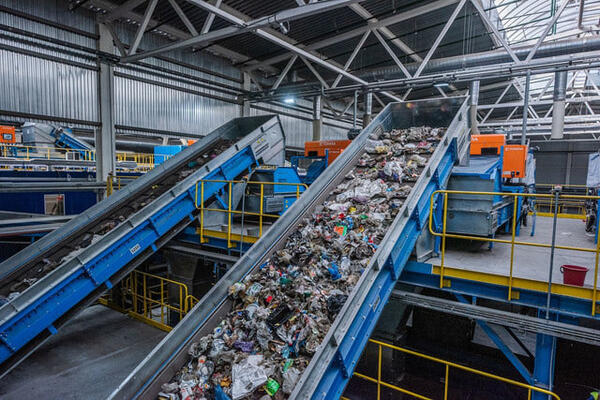
Yerevan City Hall has announced a tender for the construction and operation of a waste-processing plant in Nubarashen, which could significantly affect air quality in the coming years. The project envisions processing up to 300,000 tons of waste per year to reduce the share of landfilling and cut the “landfill” plume and fire risks. A separate environmental issue is the production of RDF fuel: burning it requires modern air-cleaning systems that Armenia does not yet have, making effective emissions monitoring crucial. The technical specifications cite compliance with EU Directive 2010/75/EU and the need for filters to capture fine particles and toxic gases. The project also includes biological stabilization of organic waste to reduce methane emissions and prevent spontaneous combustion at the landfill.
Air quality in Yerevan in January 2026:

The author describes how life in Yerevan has come to mean checking the air quality index every day and using a sensor on the balcony. In winter, pollution levels often exceed international standards and can reach dangerous values, prompting people to keep windows closed, limit walks, and wear masks. He notes that Yerevan’s authorities have long responded cautiously and at times skeptically, criticizing data from independent platforms, even though various measurement sources and residents’ well-being point to a problem. According to investigative journalism, the city’s air shows exceedances for dust, while monitoring of fine particulate matter (PM2.5/PM10) remains insufficient. Visible sources include construction sites without dust suppression, heavy truck traffic, shrinking green spaces, the smoldering Nubarashen landfill, dirty heating, burning leaves, and old cars. The author urges treating clean air as a matter of politics and enforcement, so that pollution does not shorten residents’ lives or push people to leave.
Air quality in Yerevan in December 2025:

On December 25, the Armenian government approved a procedure for state monitoring of ambient air quality, as well as the collection, analysis, assessment, and publication of data. The document notes that previous procedures did not include air quality assessment from the perspective of health risks or recommendations for precautionary and preventive measures for the public, including vulnerable groups. The roles of state agencies in informing the public in cases of pollution limit exceedances were also not legally defined. The new procedure establishes rules for monitoring, data processing, and public disclosure, and introduces provisions on the air quality index and alert thresholds. State monitoring and data provision are assigned exclusively to the Hydrometeorology and Monitoring Center under the Ministry of Environment, and a Japanese grant will be used to modernize three monitoring stations with modern automated equipment.
Air quality in Yerevan in December 2025:
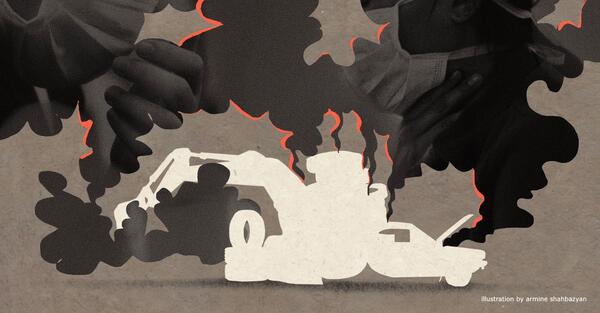
The article describes the deterioration of air quality in Yerevan, framed as a public health issue, particularly due to high concentrations of fine particulate matter (PM2.5). Key sources of pollution include construction dust (including weak oversight and numerous unfinished building sites), active quarries and mineral extraction, and transport emissions. Fires and chronic problems at the Nubarashen landfill are also cited as factors polluting the air with toxic substances. It notes that geographic and climatic conditions can “trap” pollution but are not its root cause. The piece also highlights a lack of up-to-date monitoring data, plans to modernize monitoring stations, and authorities’ intentions to tighten requirements and fines (for example, for missing protective netting at construction sites) and to develop solutions such as electric vehicles and waste-management reform.
Air quality in Yerevan in December 2025:

By decision of the Prime Minister of the Republic of Armenia, an interagency working group has been established to address issues of ambient air pollution. The composition of the working group has been approved, and it is headed by Deputy Prime Minister Tigran Khachatryan. The head of the group is required to report to the Prime Minister every 15 days on the results of the work. Monthly broad public information and coverage of the group’s activities are also предусмотрено. If necessary, the working group may establish specialized subgroups.
Air quality in Yerevan in December 2025:

Yerevan City Hall stated the need to combat the burning of leaves, and Armenia’s Inspectorate is using drones to track down villagers who set leaves on fire. However, in a field between the Avan Football Academy and Acharyan Street—used for several years by "Yerevan Greening" as a dump—branches and leaves continue to be burned. This causes heavy smoke and worsens air quality. "Yerevan Greening" was fined for the deliberate burning of waste. The situation highlights a contradiction between the authorities’ statements and the actual actions of the organizations responsible for urban greening.
Air quality in Yerevan in November 2025:

In the Dilijan area near the “Mountain Armenia” sanatorium and in surrounding forested areas, wildfires were completely extinguished on November 27. The Rescue Service of the Ministry of Internal Affairs has set up monitoring duty, and citizens are urged to strictly follow fire safety rules. At the time of filming, isolated smoldering hotspots were still observed; they were contained by Tavush civil defense teams. The article is illustrated with photos of the fire’s aftermath. As for the air, smoke persists in parts of the area, which may temporarily worsen air quality.
Air quality in Yerevan in November 2025:

The article notes that high levels of air pollution can contribute to the development of various diseases, primarily respiratory, cardiovascular, and allergic conditions. Ruben Grigoryan, a representative of Armenia’s Ministry of Health National Center for Disease Control and Prevention, explains that air pollution indicators in Yerevan remain within acceptable standards and that no special measures are required. Residents are advised, if possible, to keep windows closed, especially in areas close to fire zones, and to avoid physical activity. The increase in air pollution is attributed to unfavorable meteorological conditions—lack of wind and the accumulation of cold air. Overall, the air quality situation in Yerevan is being monitored.
Air quality in Yerevan in November 2025:

Since November 21, fires have been reported in various regions of Armenia, believed to be caused by burning dry leaves and stubble. The Ministry of Environment reports damage to forest areas where grass and trees have burned. Rescue services, the eco-patrol, and equipment have been deployed to extinguish the fires, including aerial reconnaissance and helicopter firefighting. Authorities urge residents to avoid setting fires when clearing land, as it worsens soil quality and harms health and biodiversity. Burning plant residues is prohibited by law and punishable by a fine. The article focuses on the impact of the fires on the environment and air quality.
Air quality in Yerevan in November 2025:

With the onset of winter, the air pollution problem in Yerevan intensifies, driven not only by weather conditions but also by the burning of leaves and garbage and the use of firewood for heating. Mayor Tigran Avinyan noted a significant deterioration in air quality due to major fires and emphasized the danger of toxins from such blazes. Sensors installed in the city confirm that the atmosphere becomes unhealthy, especially during the winter months. The authorities intend to tighten oversight of waste burning, which is already prohibited by law. The Environmental Protection Inspectorate has also taken up the issue, and the mayor’s office plans to obtain additional enforcement powers. Despite these measures, pollution levels remain high during the winter period.
Air quality in Yerevan in November 2025:
Read the full article on hetq.am →
“Air Quality in Yerevan Will Worsen by Winter, Avinyan Explained Why” on newsarmenia.am →

Due to an anticyclone in recent days and a lack of wind in the Ararat Valley, cold air has stagnated, leading to increased air pollution. Armenia’s Ministry of Environment Hydrometeorology and Monitoring Center reports rising concentrations of nitrogen and sulfur dioxides, while dust levels remain unchanged. Over the next five days, the current meteorological conditions are expected to persist, with a further gradual increase in air pollution. Such conditions hinder the dispersion of pollutants in the region’s atmosphere. The warning emphasizes the need to pay close attention to air quality during this period.
Air quality in Yerevan in November 2025:

Armenia has failed its reforestation and afforestation programs: despite international commitments to increase forest cover, implementation has been minimal and ineffective. A Hetq investigation shows that of the pledge to raise forest cover to 13%—planting about 50,000 hectares by 2030—only around 2% has been carried out, roughly 1,000 hectares, and many plantings do not survive due to poor site selection and lack of maintenance. Some work is carried out on unsuitable land (including swampy areas), and there are discrepancies between reported and actual planted areas. Substantial state-budget funds and international grants are being spent with little tangible result, while NGOs that provide maintenance and monitoring demonstrate much higher survival rates. The article notes that trees clean the atmosphere and absorb CO₂, affecting air quality, but under the current approach these benefits are not being achieved.
Air quality in Yerevan in October 2025:
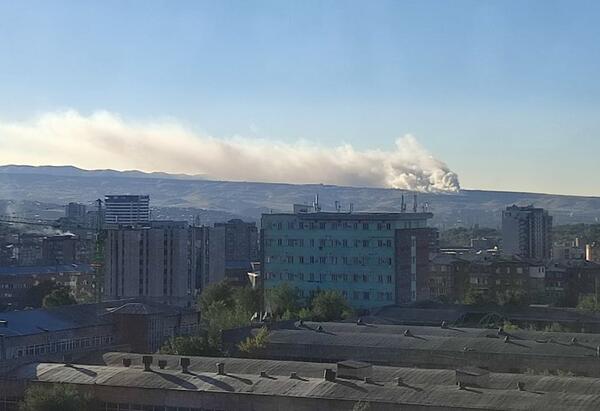
A fire has again occurred at the Nubarashen landfill in Yerevan. The report of the blaze came in during the evening, and six fire crews and 27 rescuers were involved in extinguishing it. The last similar incident at this landfill was in August. Burning waste at the site can affect the city's air quality, raising concerns among residents and authorities. The report notes the involvement of civic and government bodies in addressing the aftermath. Repeated fires at the landfill point to a waste management problem and an environmental threat.
Air quality in Yerevan in October 2025:
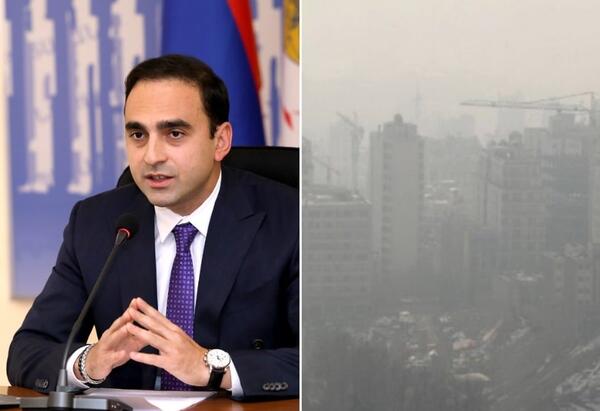
Yerevan mayor Tigran Avinyan denied rumors of poor air quality in Yerevan during the summer and autumn months, noting that this is not true. According to him, data from 166 installed devices confirm good air quality in August and September. However, he warned that air quality problems may begin in November. It was especially noted that construction work in certain areas is creating local pollution. Authorities intend to toughen penalties for developers who violate requirements to control dust and pollution. Additional disciplinary measures against violators will be taken in December.
Air quality in Yerevan in October 2025:
Read the full article on newsarmenia.am →
“The main air pollution problem in Yerevan occurs in winter: Tigran Avinyan” on ecolur.org →
“Mayor of Yerevan says there are no air quality problems in Yerevan in summer” on newsarmenia.am →