May 30 · Антон Власов, Сергей Кузнецов
Зима 25/26: отчет о качестве воздуха
Отчет AirQuality.am о зимнем качестве воздуха в Ереван. Данные по PM2.5, суточный ритм загрязнения, рост сети мониторинга и позиция городских властей.

The Air Quality Index turns pollutant measurements into a readable scale: the higher the value, the greater the health burden. In cities, fine particles PM2.5 and PM10 are especially important: they are not always visible or noticeable by smell, but they can travel deep into the respiratory system and bloodstream, causing irritation, micro-inflammation, asthma flare-ups, and additional strain on the heart and blood vessels.
We show the index and city trends so everyday decisions become easier: when to ventilate, when to reduce physical activity, which route to choose, and when the problem is not just a passing smell or smoke, but sustained pollution.
Armenia still does not have reference-grade stations for measuring PM2.5 and PM10 particles. That is why we collect data from available networks: Yerevan Municipality installs high-quality optical sensors, while civic initiatives and independent projects add coverage where official measurements are missing.
AirQuality.am also collects data from state monitoring stations. They are important as an official source, but their measurements are published with a long delay and do not provide an operational picture of the city.
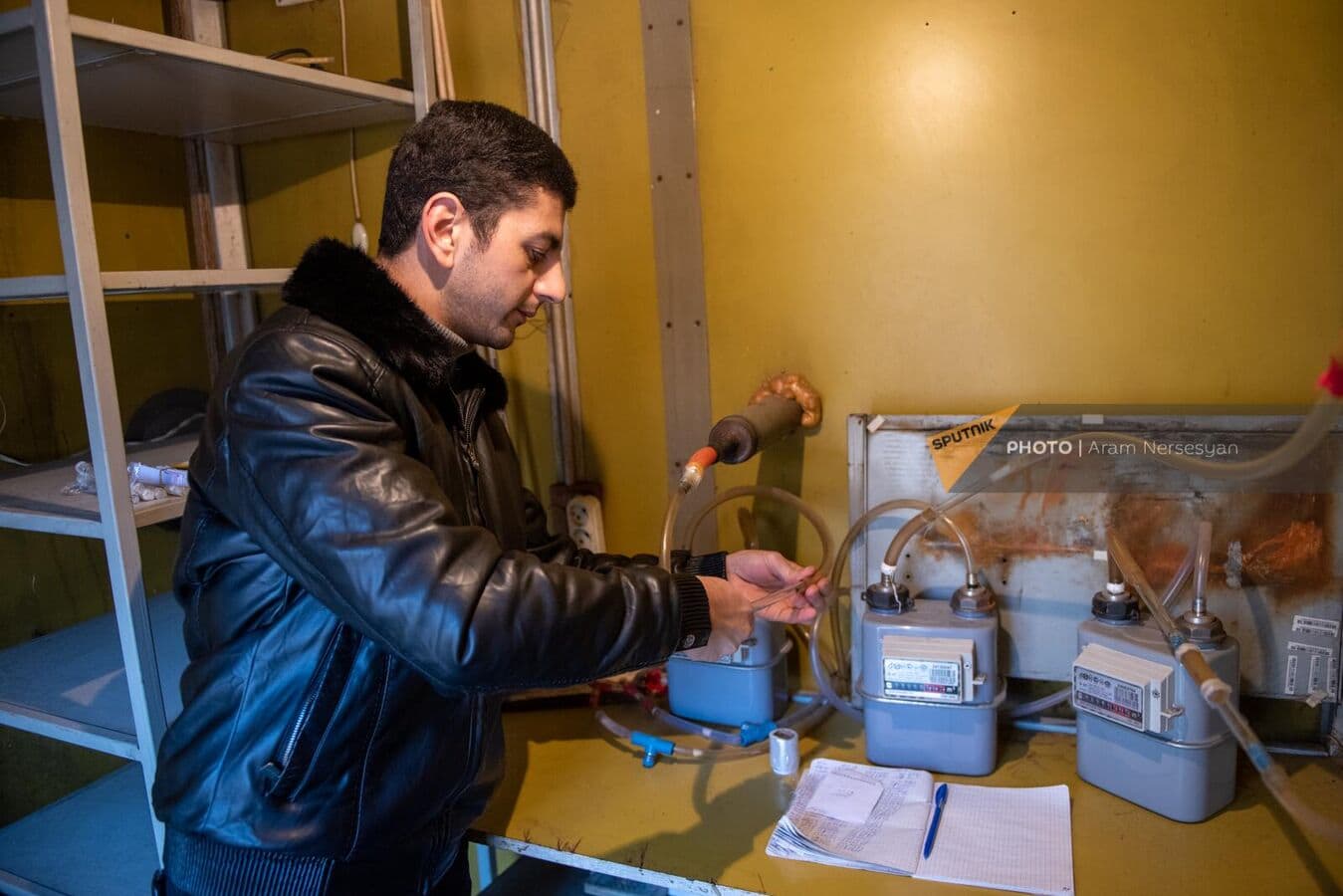
In a Sputnik Armenia article, staff from the Hydrometeorology and Monitoring Center explain how this process works: air passes through filters and tubes, then the samples are taken to a laboratory for analysis. As a result, the data usually describes the previous day rather than the current situation in the city.
The stations themselves are largely outdated: they measure total dust, but do not split it into PM2.5 and PM10 fractions. This means the data cannot be compared directly with modern air quality indexes. On the map, state stations are marked in blue, and you can inspect their readings separately. The list of these stations is available in the MeteoMonitoring.am source section.
µSv/h
We take background radiation data from GMCMap, an international sensor network based on Geiger counters. These measurements do not replace official radiation control, but they help track the current background and notice sharp deviations.
In Yerevan, the usual background often stays around 0.14-0.18 µSv/h. For comparison, in coastal New York or Paris, instruments may show only 0.05 µSv/h, while flat Berlin is around 0.08 µSv/h. Yerevan is much closer to Scandinavia or Asia: in Helsinki and Seoul, normal background is around the same 0.12-0.15 µSv/h, and in high-altitude Denver it can reach 0.22 µSv/h. Yerevan's background is explained by its elevation of about one kilometer above sea level and by the abundance of volcanic tuff and basalt around the city.
May 30 · Антон Власов, Сергей Кузнецов
Отчет AirQuality.am о зимнем качестве воздуха в Ереван. Данные по PM2.5, суточный ритм загрязнения, рост сети мониторинга и позиция городских властей.

The Armenian government has introduced amendments to a number of decisions: starting on November 1, 2027, new standards and methodologies for assessing ambient air quality will take effect. As part of a comprehensive measures program for 2025–2030, the air quality monitoring system is set to be модернизация, including the purchase of 14 stationary stations, 6 of them for Yerevan. In 2025, the Ministry of Environment was allocated 300 million drams to purchase two air quality assessment stations. These two stations have been installed in Yerevan (Kentron administrative district and a park in Kanaker-Zeytun) and are undergoing testing and calibration. They are expected to enable more accurate measurement of key pollutants and provide real-time data.

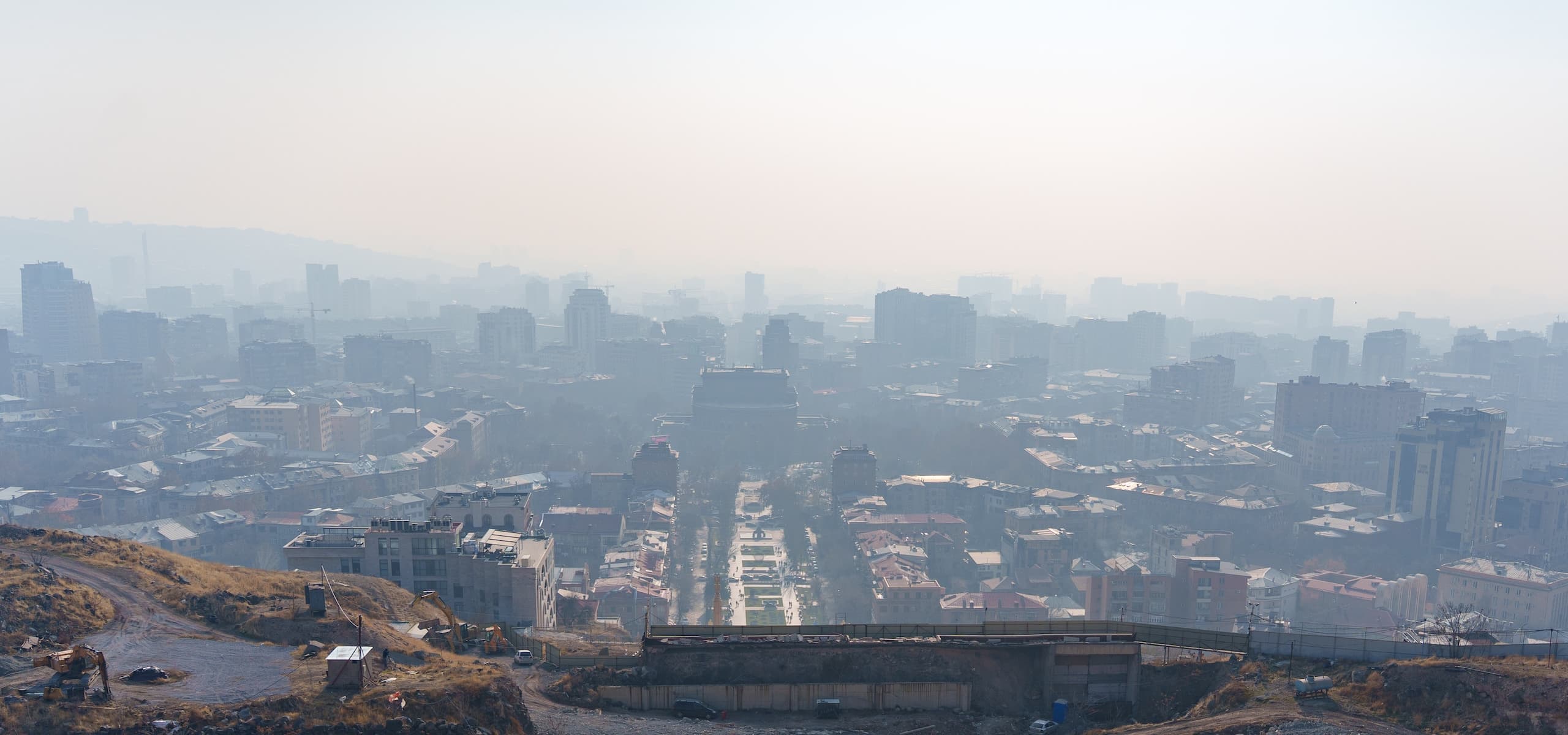
Yerevan Mayor Tigran Avinyan said that current air pollution levels are no longer as high as in November, even though it is now the peak construction season and traffic is heavy. According to him, from November to March air quality largely depends on a climatic phenomenon: an “atmospheric layer” descends, causing pollutants to concentrate closer to the ground. He noted that this situation is typical not only for Yerevan but also for the entire Ararat Valley and neighboring areas. As temperatures rise, the atmospheric layer lifts and observed pollution levels decrease. The municipality, the mayor said, publishes open data and air quality forecasts.

The article describes winter air pollution in Yerevan, when smog and temperature inversions trap pollutants near the ground and residents regularly record “unhealthy” readings. AirQuality.am, created by Anton Vlasov, brings together fragmented air-quality data from municipal sensors, volunteer DIY networks, weather stations, and independent monitoring platforms, making it accessible and easy to understand. The platform publishes hourly updates, as well as open raw and processed datasets with documentation. The ArmAQI initiative and other volunteer networks expand sensor coverage across city districts. The project encourages residents to install their own sensors, share data, and engage with authorities on measures to reduce dust and waste burning and to expand green spaces.
Media Coverage of Air Quality in Armenia →
AirQuality.am publishes open air quality data so measurements can be checked, reused, and analyzed independently. The file exports include raw and processed data for stations, cities, and districts, suitable for research, journalism, visualizations, and long-term pollution analysis.
For apps, maps, and widgets, the API is usually more convenient: it can return the station list, current readings, and historical aggregates without downloading the full archive. Available requests and examples are described in the API documentation. When using the data, please keep a link to AirQuality.am as the source.